Investing
S&P 500 Hits 7,000: Is the Bull Market Back?

On Wednesday afternoon, something happened that investors have been waiting for all year. The S&P 500 closed above 7,000 for the very first time -- hitting 7,022.90 -- and officially erasing every single dollar of losses accumulated since the Iran conflict began in late February.
The Nasdaq reached a new all-time high too, capping its first ten-day winning streak since November 2021. The Dow surged over 1,300 points in a single session earlier in the week when President Trump announced a two-week ceasefire. Oil tumbled from over $100 to roughly $91 a barrel. And bank earnings came in beating expectations across the board.
In the span of just ten trading days, the market mood shifted from "are we heading into a recession?" to "is this the start of a new leg higher?"
So is the bull market really back -- or is this a trap?
Let us break down what happened this week, what it means, and how to think about it as an investor.
The 7,000 Milestone: Why It Matters
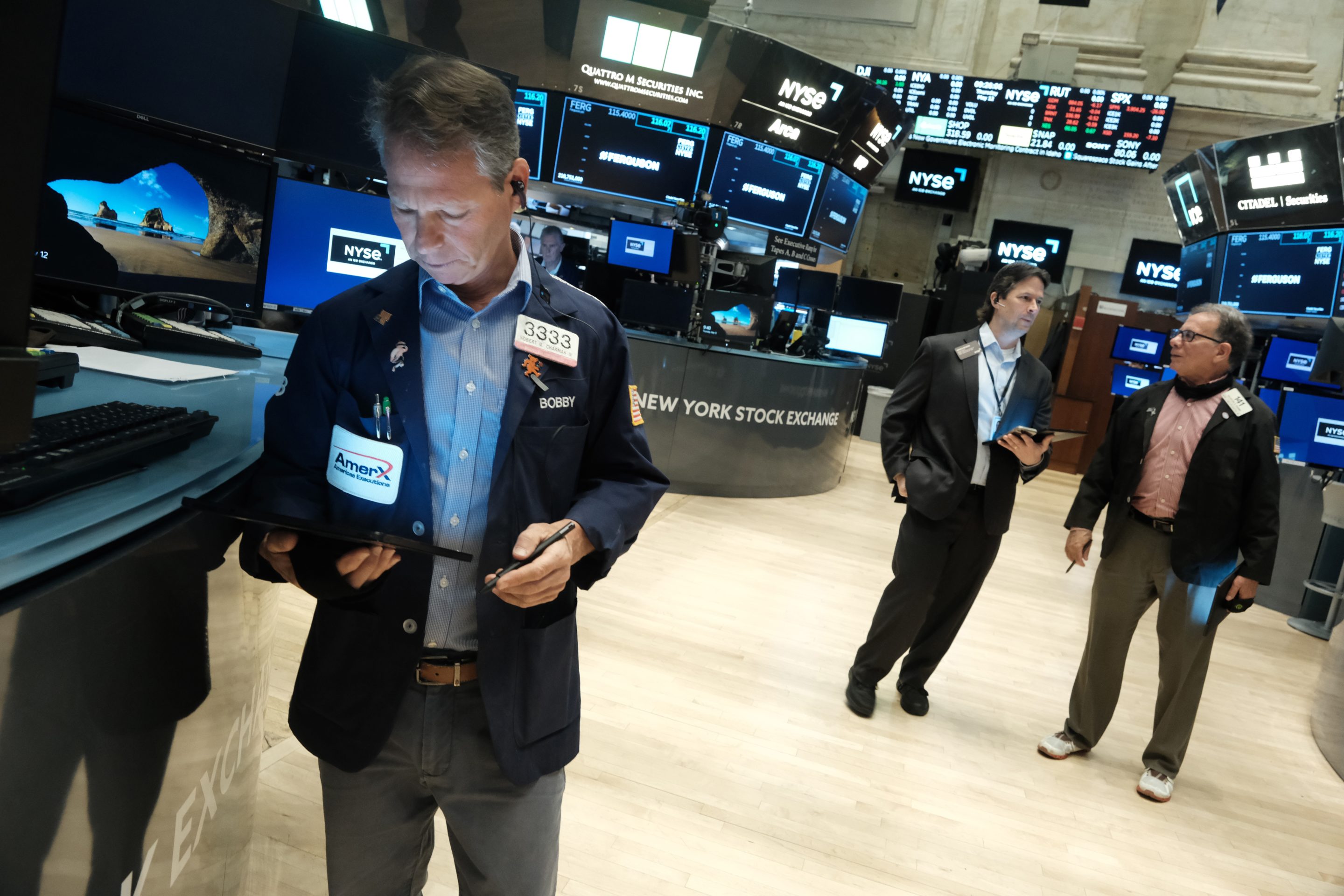
Round numbers in the market are psychological milestones, not fundamental ones. The S&P 500 at 7,000 is not meaningfully different from 6,995. But what it represents matters enormously: it tells the market -- and the world -- that the Iran conflict failed to permanently damage the trajectory of the American economy.
Here are the key numbers behind the milestone:
- S&P 500 closed at 7,022.90 on Wednesday April 15, surpassing its previous record of 7,002.28 set on January 28
- The Nasdaq posted 10 consecutive winning sessions -- the longest streak since November 2021
- The Dow gained 1,300+ points on Monday alone when the ceasefire was announced, its best day since April 2025
- $462 billion flowed into ETFs during Q1 2026, proving that investors were buying throughout the downturn
- Nine of the last ten S&P 500 sessions have been positive
Fundstrat's Tom Lee, one of Wall Street's most-watched strategists, told CNBC on Wednesday that "the stock market is in a better position now than at the all-time high" because the war proved the US economy can absorb an oil shock without cracking. That resilience, he argued, is worth paying up for.
But Lee also highlighted something important: the rally has been led by tech mega-caps, with only four of eleven sectors finishing in the green on Wednesday. When a rally narrows, it can be a warning sign. More on that later.
What Drove the Rally: Ceasefire, Earnings, and Cooler Prices
Three catalysts converged this week to create the breakout.
The Iran Ceasefire. On April 7, President Trump announced a conditional two-week pause in military operations. Iran's Foreign Minister confirmed that negotiations on "various topics" were advancing. By Tuesday, a White House representative told CNBC that second-round talks were being "contemplated," and Trump told the New York Post that discussions could resume "in the next two days." Oil prices responded immediately -- WTI crude dropped nearly 8% on Tuesday alone, from over $100 to $91.28. The ceasefire does not end the conflict, but it opens the door to a Hormuz deal that could bring oil back to $75-80.
Bank Earnings Beat Across the Board. JPMorgan reported record Q1 net income of $16.4 billion. But it was not alone. Wells Fargo, Citigroup, Goldman Sachs, Bank of America, Morgan Stanley, BlackRock -- every major financial institution beat estimates this week. The message was consistent: the consumer is resilient, credit is normalizing (not collapsing), and deal-making is surging. Investment banking fees are up mid-to-high teens at most firms.
Producer Prices Came in Cool. Tuesday's PPI (Producer Price Index) reading surprised to the downside -- up just 0.5% in March, well below the Dow Jones estimate of 1.0%. This matters because producer prices are a leading indicator of consumer prices. If input costs are moderating, it suggests that the worst of the inflation spike may be behind us, even with elevated oil.
The Netflix Signal: Reed Hastings Exits After 29 Years
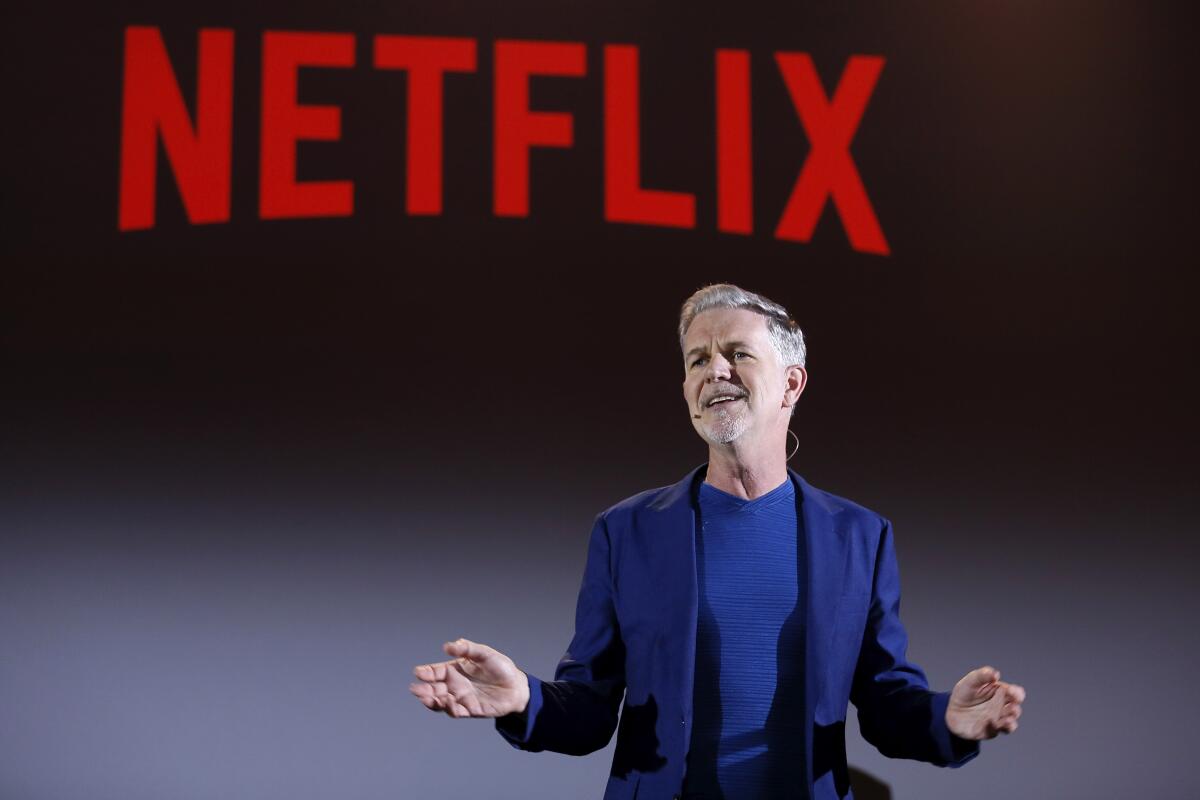
Thursday brought another headline that resonated beyond its immediate financial impact. Netflix reported Q1 earnings -- revenue of $12.18 billion, roughly in line with estimates -- but the real story was the announcement that co-founder and chairman Reed Hastings will step down from the board in June after 29 years.
This follows Jamie Dimon's succession announcement at JPMorgan just last week. Two of America's most iconic business leaders, both stepping aside within days of each other.
For investors, the Netflix result contained a cautionary note. Shares dropped over 9% in after-hours trading. The reason was not Q1 performance -- it was guidance. Netflix's Q2 forecast fell short of analyst expectations, and the company acknowledged that the war-related economic uncertainty could weigh on subscriber growth in the months ahead.
Here is what Netflix tells us about the broader market: even in a week where the S&P 500 hit all-time highs, companies that deliver soft forward guidance get punished. The market is rewarding confidence and punishing uncertainty. That is a sign of a healthy, discerning bull market -- not the "everything rallies" euphoria that preceded past crashes.
Ted Sarandos, Netflix's co-CEO, did provide one encouraging signal. He stated the company had "really built our M&A muscle" during the failed Warner Bros. Discovery bid. Netflix is not done growing. It is simply entering its next chapter -- and investors need to decide whether the new chapter justifies the premium valuation.
Oil and the Iran Wildcard: What Happens Next

The single biggest variable for the market over the next two months is the Iran situation. Everything else -- earnings, the Fed, inflation -- is secondary to whether the Strait of Hormuz fully reopens.
Here is where things stand:
- The two-week ceasefire announced April 7 runs out in late April. Both sides have expressed willingness to talk, but nothing is agreed yet.
- Oil has dropped from $113 to roughly $90-95 on ceasefire optimism, but remains far above the pre-conflict level of $70-75.
- Trump announced an Israel-Lebanon 10-day ceasefire separately on Thursday, reducing some of the broader regional risk.
- If a permanent deal is reached by May: Oil could retrace to $75-80. CPI would moderate. The Fed could resume rate cuts in the second half. Markets would likely rally further.
- If talks collapse: Oil could spike back above $110. Inflation would reaccelerate. The stagflation scenario returns. The market would give back much of this week's gains.
The honest truth is that nobody can predict geopolitics with precision. What you can do as an investor is acknowledge the range of outcomes and position accordingly.
Should You Chase This Rally? 5 Rules for What Comes Next
The temptation after a week like this is to go all in. The S&P 500 is at a record. The war might be ending. Earnings are strong. Everything looks great.
But here is what history teaches us about market recoveries from geopolitical shocks: they tend to overshoot both on the way down and on the way up. The investors who perform best are not the ones who chase the rally. They are the ones who have a plan.
1. Do not confuse a ceasefire with a peace deal. Markets have priced in significant ceasefire optimism. If talks break down in late April, the reversal will be swift. Avoid going leveraged or all-in based on a two-week truce.
2. Follow the earnings, not the headlines. This week proved that companies with strong results and confident guidance get rewarded (JPMorgan +4.2%, Goldman +3.5%). Companies with soft guidance get punished (Netflix -9%). Let Q1 earnings guide your stock selection -- not geopolitical headlines.
3. Watch the rally breadth. On Wednesday, the S&P 500 hit its record but only four of eleven sectors finished green. That means the rally is being carried by a handful of mega-cap tech stocks. Healthy bull markets are broad-based. If the breadth does not improve, this rally may be fragile.
4. Rebalance, do not restart. If you have been holding cash or underweight equities during the downturn, this is a reasonable time to add -- but gradually. Dollar-cost averaging works in your favour during volatile periods. Do not try to put six months of missed buying into one week.
5. Keep your hedges. Gold is at $4,781 per ounce. The 10-year Treasury yields 4.33%. These are real, valuable diversifiers. Even with the S&P 500 at a record, the world has not suddenly become risk-free. Maintain your allocation to gold, bonds, and non-US equities as insurance against the scenarios that could still go wrong.
The Week Ahead: Earnings Avalanche
Next week brings one of the heaviest earnings calendars of the quarter:
- Monday April 21: GE Aerospace, UnitedHealth, RTX, Northrop Grumman, Capital One, United Airlines
- Tuesday April 22: Tesla, Boeing, IBM, AT&T, Philip Morris, ServiceNow, Texas Instruments
- Wednesday April 23: American Express, Intel, Honeywell, Lockheed Martin, Blackstone, Comcast, Newmont
- Iran ceasefire deadline: Late April -- the market's most important date this month
Tesla on Tuesday will be the must-watch report. The stock has been one of the most volatile names this year. A strong quarter could reignite the growth stock rally. A miss could remind investors that even in a bull market, valuation matters.
The S&P 500 above 7,000 is not a finish line. It is a checkpoint. It tells us that the market believes the worst is behind us -- that the Iran conflict can be resolved, that earnings are strong enough to power through an oil shock, and that the American economy remains the most resilient in the world.
But belief is not certainty. The ceasefire could collapse. Oil could spike. Inflation could surprise. The job of an investor is not to predict the future with perfection -- it is to be positioned to benefit no matter which future arrives.
The bull market is not asking for your permission. The question is whether you are positioned to participate in it.
What if you could be the first to uncover the latest trends, insights, and opportunities?
Dive into our community today and get a head start on the market!
Get exclusive access to cutting-edge updates, expert opinions, and must-know news -- all in one place.
STAY AHEAD OF THE GAME!
Let's Build Wealth & Give Wealth!
Together, Next Level