Investing
PCE Lands, AI Reloads: Salesforce's $25B Buyback Says It All
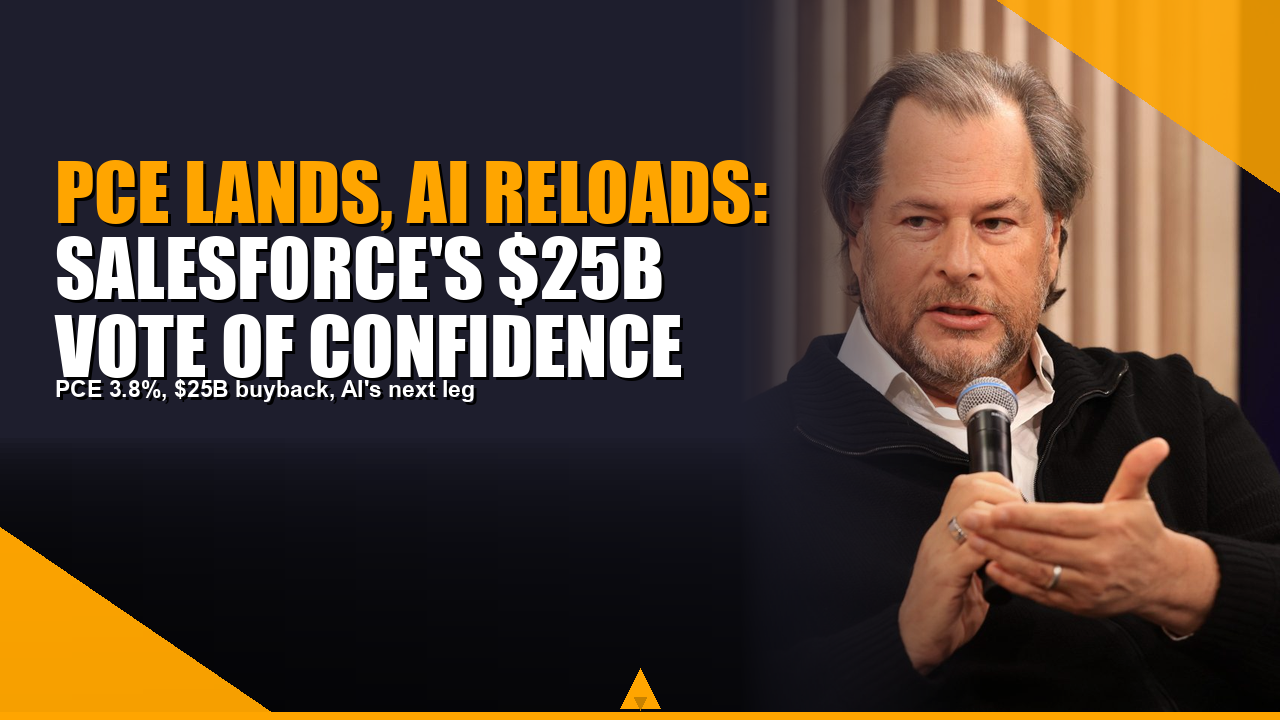
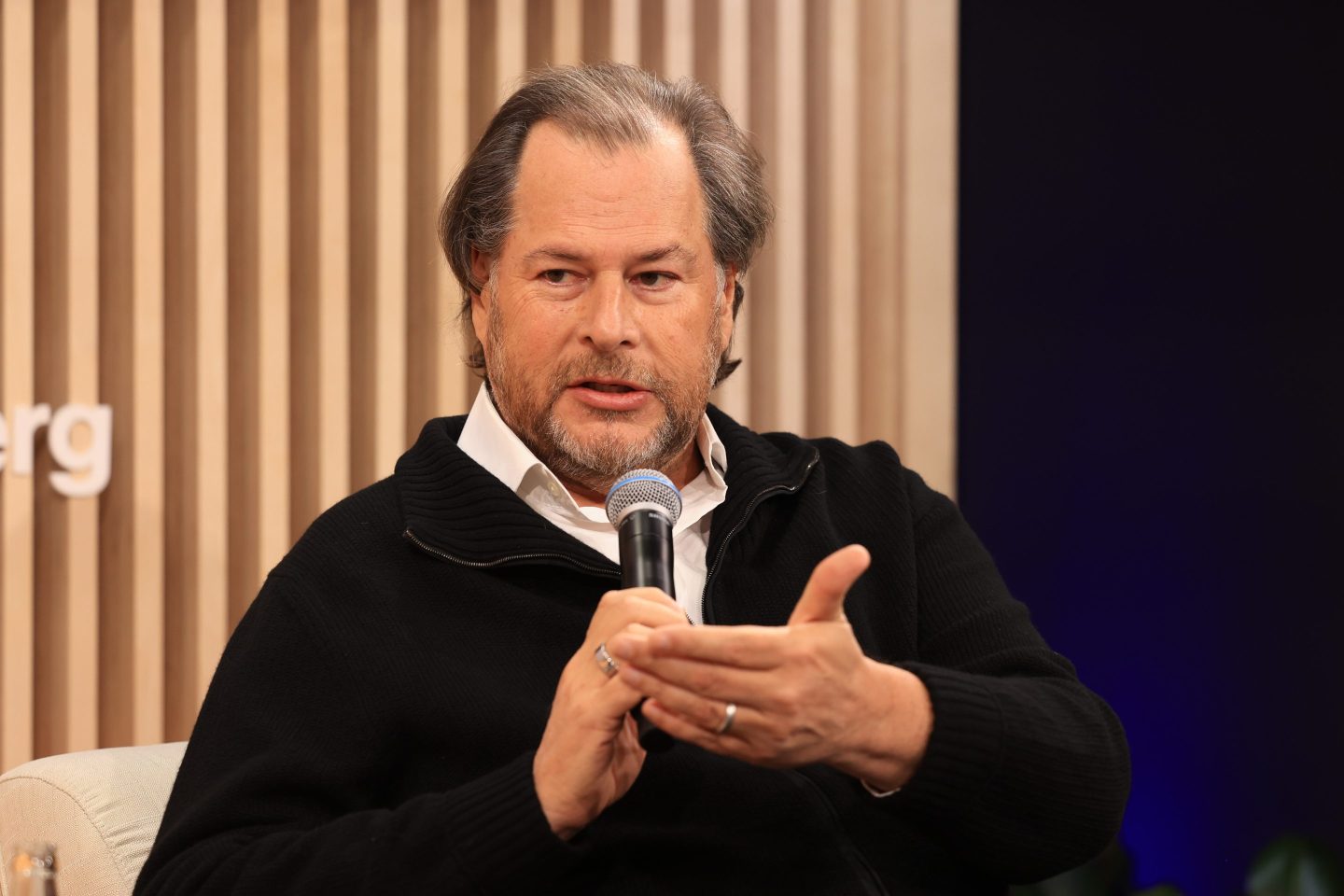
On Wednesday after the close, Salesforce did something only a handful of mega-caps can do in a market like this. It put up a record quarter, raised full-year guidance, and announced a $25 billion accelerated share repurchase on top of an already large buyback program. Total capital returned to shareholders this year now sits at $27.5 billion. Marc Benioff called agentic AI Salesforce's biggest growth opportunity in years, and meant it.
On Thursday morning, the April PCE inflation report came in roughly as feared. Headline 3.8% year-over-year, core 3.3%, both right at consensus. The Fed's preferred inflation gauge confirmed what the CPI told us two weeks ago: this is not transitory anymore. And yet stocks closed the week firm. The S&P held above 6,800. Salesforce ripped on guidance. Nvidia, Palantir, and Broadcom kept their bids.
The market is telling you something important. Inflation is sticky, rate cuts are essentially off the table for 2026, and the AI capex cycle has more lives than anyone gave it credit for. Here is how to read this week, and how to position into June.
PCE Confirms What CPI Already Said
Headline PCE rose 0.4% in April, slightly below the 0.5% consensus. Core PCE rose 0.2% month-over-month, also a touch under expectations. The annual rate of headline PCE jumped to 3.8% from 3.5% in March and 2.9% as recently as January. Core PCE annual was 3.3%, up from 3.2%.
Goods prices rose 0.7% on the month, dragged higher by a 5.5% jump in gasoline. Services prices rose 0.3%, with housing and utilities up 0.6% and services and accommodations up 0.5%. The composition matters: this is no longer just one-off geopolitical energy. Shelter is sticky, services are sticky, and Warsh's preferred trimmed-mean measures are no longer providing a friendly cover story.
For Fed watchers, the takeaway is simple. CME FedWatch is now pricing essentially zero chance of a 2026 cut, and assigns a meaningful probability that the next move is actually a hike. Three months ago the market was pricing four cuts. The narrative inversion is complete.
Salesforce Wrote the Playbook for AI Mega-Caps
Salesforce Q1 FY27 was the cleanest enterprise software print of the year so far. Revenue grew 13% year-over-year. Operating cash flow hit $6.5 billion, up 18%. The remaining performance obligation, which captures contracted future revenue, ended at $67.9 billion. Management raised full-year FY27 revenue guidance to $45.9 to $46.2 billion, above where the street was modeling.
Then they announced the $25 billion accelerated share repurchase. With the existing program plus the new accelerated buyback, Salesforce has now returned $27.5 billion to shareholders in less than a year. The dividend is going up too. This is what a mature software business looks like when it has both growth from a new category, agentic AI, and the cash flow to compound through a tougher macro.
The strategic message Benioff delivered on the call was even more important than the numbers. He framed agentic AI as the largest growth opportunity in Salesforce's history, larger than CRM, larger than the Data Cloud build-out. Agentforce, the company's autonomous agent product, is moving from pilot deployments into multi-million dollar enterprise contracts. Pricing is being structured per outcome and per consumed AI cycle, not per seat. That is a material change in software economics.
For retail investors, the lesson is broader than Salesforce. Enterprise software vendors with strong distribution, deep customer relationships, and proprietary data are now monetizing AI at the application layer. The mega-caps that own those relationships, Microsoft, Salesforce, ServiceNow, Adobe, are the ones taking the early revenue. The "AI infrastructure first, applications later" narrative is now playing out in real numbers.

Costco Confirms the Trade-Down Is Real
Costco reported Thursday after the close. The headline number that mattered was April comparable sales, up 11.6% overall and 7.8% if you strip out gasoline and foreign exchange effects. Digitally enabled comps surged 18.8% in April and are running at 21.6% for the first 35 weeks of the fiscal year. Membership renewals held at 89%.
Read those numbers alongside Walmart last week. Walmart's US comp was 4.1% and clearly benefiting from higher-income shoppers trading down. Costco at 7.8% ex-gas/FX is doing the same, but with a richer member base and a membership-fee flywheel that compounds. If you wanted a clean look at how the consumer is splitting in 2026, you now have it: the bottom half is stretched, the top half is moving from premium grocers and direct-to-consumer brands into bulk and value formats.
For your portfolio, that has two implications. First, the trade-down winners are larger and more durable than the typical recession-defensive trade. Costco, Walmart, BJ's, the dollar stores, and TJX are all positioned. Second, the trade-down losers extend beyond the obvious mid-market discretionary names into specialty grocers and premium-priced household-goods brands. Audit your consumer exposure with that frame.
Warsh's "Regime Change" Is Already Starting
Kevin Warsh has been Fed Chair for ten days. In that window, three things have become clear. First, he is serious about shrinking the balance sheet. He has described it as "bloated" and signaled in private and public commentary that the Fed should return to a "scarce reserves" framework. Second, he is questioning the dot plot, the eight-meetings-a-year cadence, and even how the Fed measures inflation. He wants trimmed-mean measures elevated above headline CPI in policy communication. Third, and most underappreciated, his real reform may target the financial plumbing rather than the headline policy rate.
CNBC reported this week that Warsh and his advisers are studying whether to make the overnight repo rate, rather than the federal funds rate, the primary policy lever. If that happens, it changes how policy transmits to Treasury yields, mortgage rates, and corporate borrowing costs. It also gives Warsh a way to "lower rates" in a headline sense while keeping actual financial conditions tighter than the dovish reading would suggest.
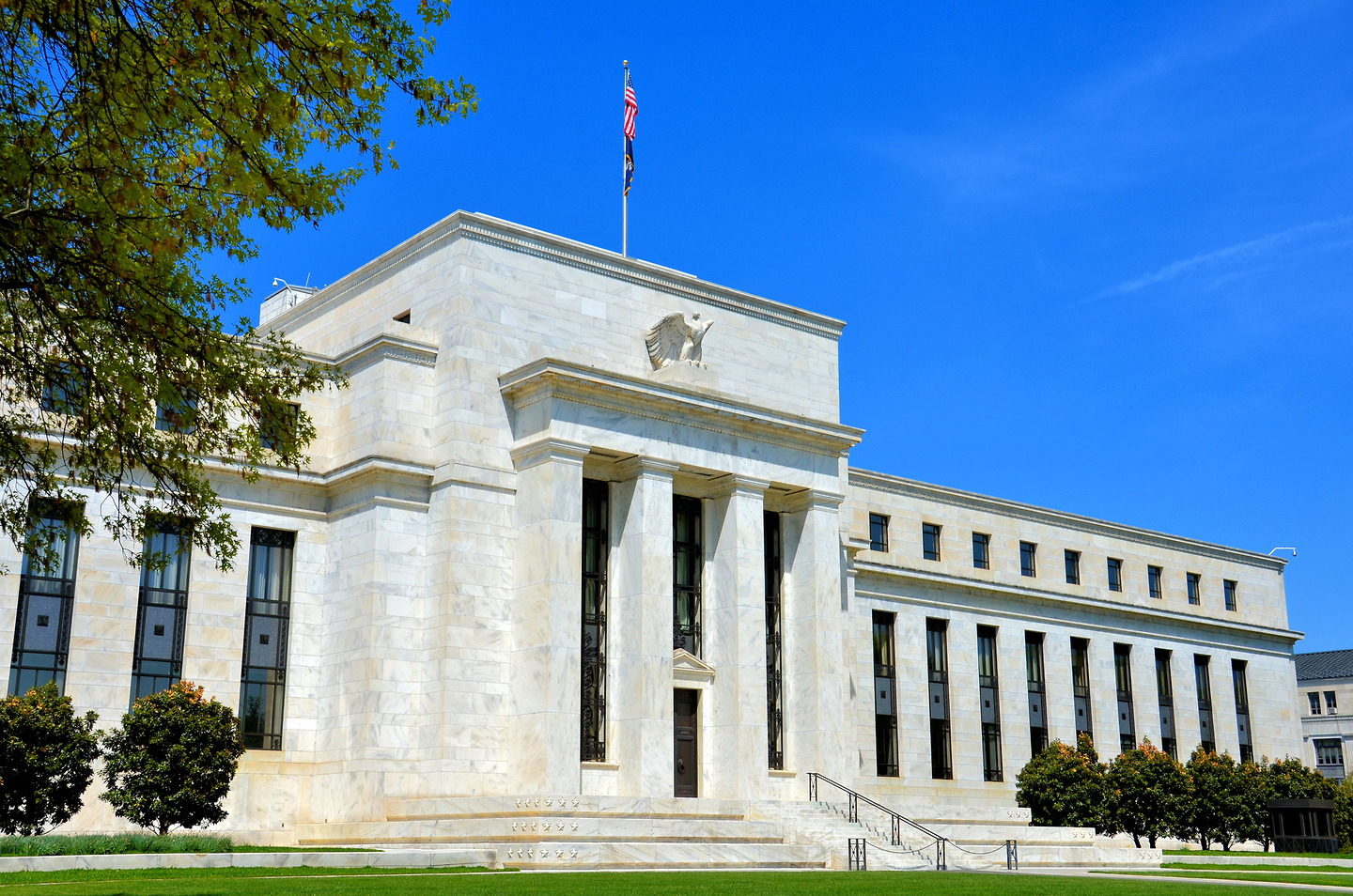
For retail investors, this is technical but consequential. A Fed that explicitly aims to be less present in markets is one that lets risk assets stand on their own fundamentals, for better and for worse. The "Fed put" gets thinner. Expect more two-way volatility around earnings, geopolitics, and Treasury auctions over the next twelve months.
Five Lessons From This Week
Pulling it together, here is what every Next Level student should take from this week:
1. Sticky is the operative word. PCE at 3.8%, core at 3.3%, both still climbing. Build your 2026-2027 model around inflation in the 3% to 4% range, not 2%.
2. Quality cash flow plus buybacks is the winning template. Salesforce showed it. So did Apple, Berkshire, and Walmart in their own ways this earnings season. Companies returning capital aggressively into a high-rate environment are the cleanest expressions of resilience.
3. AI's second leg is enterprise software. Agentforce-style products are real revenue now. Look at ServiceNow, Microsoft, Adobe, and the verticalized SaaS leaders for the next round of beats.
4. The K-shaped consumer is widening into a Costco-Walmart duopoly at the top end of mass. The trade-down trend is no longer a recession trade. It is a structural shift while real wages stay negative.
5. Watch the plumbing. If Warsh shifts the policy rate toward overnight repo or accelerates QT, the bond market will move first and equities will follow. Reading Fed implementation notes is now part of every serious investor's homework.
Week Ahead
Next week brings the May ISM Manufacturing and Services prints, the May employment report on Friday, and earnings from Dollar General, Lululemon, Broadcom, and DocuSign. The June 16-17 FOMC meeting is now sixteen trading days away, and it will be Warsh's first as Chair. Expect his pre-meeting communication, including any prepared remarks ahead of the blackout window, to be parsed line by line.
Stay diversified. Keep your energy and gold hedges in place. Tilt toward profitable AI applications, trade-down consumer leaders, and high-quality balance sheets. Trim names where the multiple is doing all the work. And remember the master variable: 30-year yields are still north of 5%. Until that changes, every long-duration cash flow in the market is on the clock.
If you want to discuss this week's setup with other investors, learn the frameworks we use to read FOMC implementation language, and get our weekly portfolio walkthrough, join us on Telegram: https://t.me/+6VRTM83FVqEwZDll
Together, Next Level.