Investing
Family Fight: The Fed Splits, PepsiCo Misses, and Banks Open Q2 Season

Kevin Warsh called it "a good family fight" the day he closed his first FOMC meeting. On Wednesday, three weeks later, the minutes from that meeting confirmed exactly what he meant. The June record showed a committee genuinely split down the middle — "many" saying the appropriate year-end rate is above the current 3.50-3.75%, "many others" saying it is within or slightly below. It was not the unified march toward hikes that the hawkish June dot plot implied. It was two camps, both hardening, in the same room.
This week gave us the first real look at how that fight will unfold in public. The FOMC minutes leaned hawkish. PepsiCo missed on adjusted EPS as North American consumers pulled back. Q2 earnings season formally begins next Tuesday with JPMorgan, Citigroup, and Wells Fargo — Jamie Dimon's window to tell the market what he actually sees in consumer credit. And the S&P 500 quietly extended its 11-year July winning streak with a record close on Thursday, one day after the minutes dropped. Here is what happened, and why the tension between the Fed's fight and corporate earnings will define the next month.
The Fed's Family Fight, In Writing
The June 16-17 FOMC minutes released Wednesday at 2 pm Eastern were the first written record of a Warsh-run committee. Three details stood out. First, the easing bias was removed unanimously — every voting member agreed to strip forward guidance out of the statement. Second, "almost all" participants indicated some policy firming would likely be warranted if inflation stays elevated on the current trajectory. Third, and most importantly, the committee was cleanly split on where rates should end 2026: "many" saw a target above the current 3.50-3.75%, "many other" saw within or slightly below.

The Summary of Economic Projections told the more consequential story. The median 2026 PCE inflation forecast was revised from 2.7% to 3.6% — the sharpest single-meeting upward revision in the current cycle. Nine of the nineteen participants penciled in dots above the current range for year-end. Five to six participants told the record that current policy is "not restrictive" — meaning cuts would not be appropriate even if inflation cools.
Markets read the minutes as hawkish but not decisive. Fed funds futures priced September hike odds at roughly 50%, up from about 40% before the release but well below the 67% reached immediately after the June meeting. The August 1 payrolls print will settle a lot of that. Another sub-100K month combined with softer CPI would meaningfully change the balance of voices on the committee. A rebound in jobs or another 4%+ inflation print would tip it hawkish.
PepsiCo Flags The First Real Consumer Crack
Thursday's PepsiCo Q2 print was the first mega-cap of earnings season, and it delivered exactly the message the bulls did not want to hear. Revenue of $24.18 billion beat consensus of $23.9 billion, and organic revenue grew nearly 7% in the first half. Global volumes rose 3% in foods and 2% in beverages — the fastest volume growth since 2022. Those are decent numbers.

But the earnings line missed. Adjusted EPS of $2.20 came in a cent below the $2.21 consensus, and the miss came almost entirely from North America. Frito-Lay North America volumes declined. Snack demand from lower-income US consumers softened materially. Management reaffirmed full-year guidance but told the call that results would land toward the low end of the EPS range. The stock initially traded down, then recovered on the tariff-refund tailwind CFO Steve Schmitt flagged for 2026 EPS growth.
The read-through matters more than the headline miss. PepsiCo has one of the cleanest lower-income US consumer signals of any staples name. If Frito-Lay volumes are softening and management is guiding to the low end of the range, that is a warning shot for consumer-discretionary earnings in two weeks. Delta Air Lines reports Friday morning — this post publishes before the print — and Delta's guidance for Q3 airfare demand will be the second read. If both PepsiCo and Delta signal a softer consumer, the pain trade for the rotation-into-cyclicals trade is up.
Banks Open Q2 Season Tuesday
The main event next week is the bank Q2 kickoff. JPMorgan, Citigroup, Wells Fargo, and BlackRock all report Tuesday morning July 14 before the open. Bank of America, Morgan Stanley, and Goldman Sachs follow Wednesday. Consensus expects EPS growth across the group — JPMorgan at $5.70 vs $5.24 a year ago, Bank of America at $1.11 vs $0.89, Citi at $2.68 vs $1.96, Wells Fargo at $1.71 vs $1.60, Goldman at $13.91 vs $10.91, Morgan Stanley at $2.84 vs $2.13.
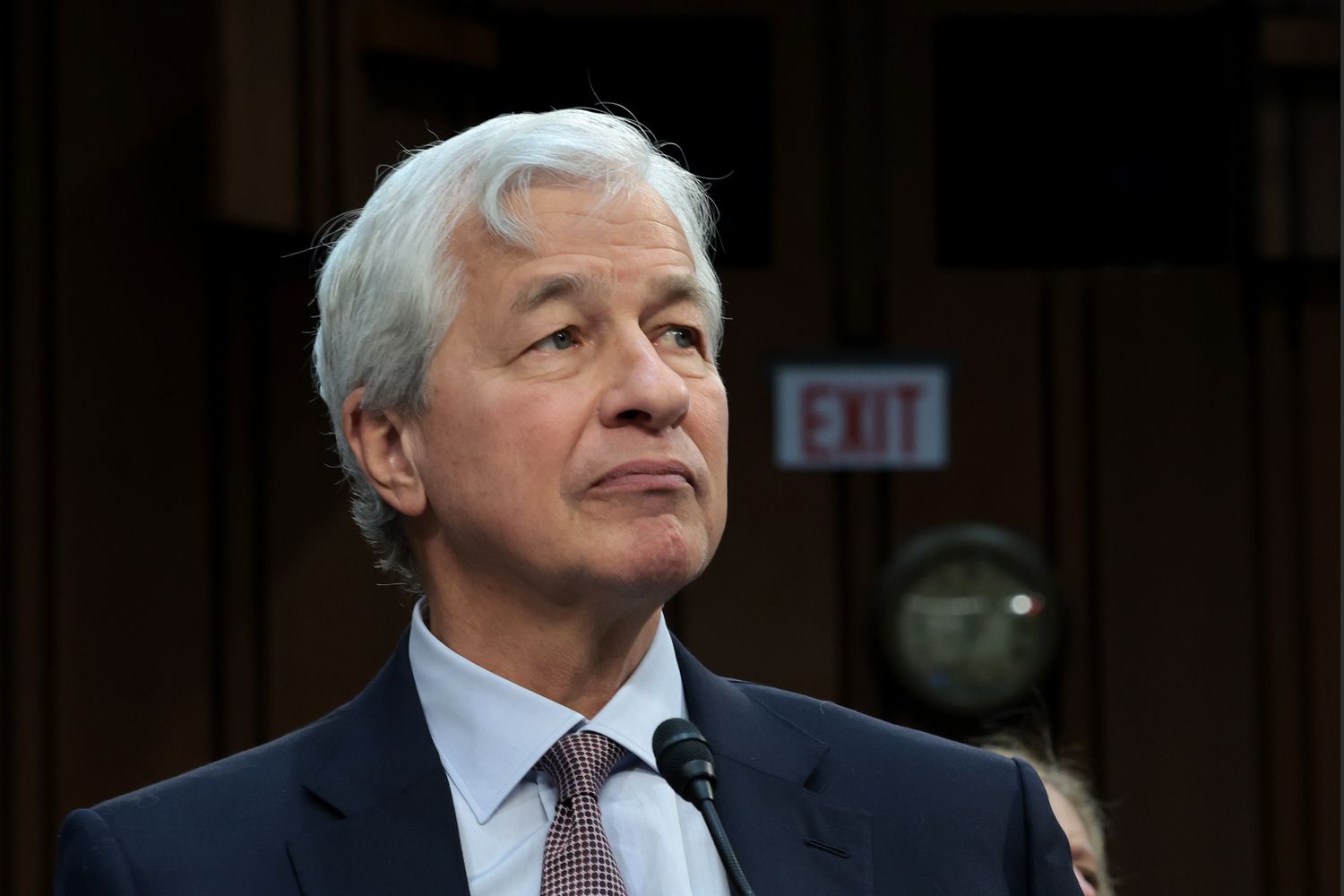
The setup is unusually positive on capital markets and unusually anxious on consumer credit. Investment banking fees are expected to be up double digits across the group — Dimon flagged 10%+ growth at an investor conference in May, and the SpaceX IPO plus a broader M&A rebound in Q2 lifted the bar. Trading revenue is expected to be strong across FICC and equities. Following last week's clean stress test results, expect meaningful buyback and dividend authorizations announced alongside or shortly after these prints.
The single most important number in the entire release will be the credit-card net charge-off rate at JPMorgan and Citi. The Fed's stress test scenario assumed a 17.1% credit card loss rate — up from prior years. If actual Q2 charge-offs are running toward that level, the "consumer is fine" narrative gets seriously challenged. If charge-offs are stable or improving, banks confirm the goldilocks-plus-inflation story from Run 14. Watch this print closer than the EPS beat.
ISM Services Confirms The Split Economy
Monday's ISM Services PMI came in at 54.0 for June, down 0.5 points from May but the 24th straight month of expansion. The composition is what mattered: business activity was 55.4 (down from 57.7), new orders 55.1 (down from 57.3), and prices paid dropped to 67.7 (the first sub-70 print in months). The employment sub-index rebounded three points to 51.0 — back into expansion territory for the first time since February.
Overlay this on Thursday's payrolls print from last week and the ISM Manufacturing print at 53.3, and the shape becomes clearer. The manufacturing side of the US economy is holding up. The services side of the US economy is decelerating from a very high base, but not contracting. And the employment components of both surveys just improved simultaneously — which is the softer version of the "labor market strength" signal that Warsh has been using to justify holding rates.
For investors, this validates the position that a single 57K payrolls print does not equal a labor recession. It also complicates the Fed's job — because if the ISM employment sub-indices continue firming while nonfarm payrolls remain soft, the hawks on the committee will argue that the July print was a one-off and stick with the higher-for-longer stance. The next payrolls report on August 1 becomes the single biggest data point of the summer.
Records Keep Coming
The S&P 500 closed at a fresh record high on Thursday, July 9 — extending the streak that has now made July the strongest calendar month for the index over 11 consecutive years, with an average return of about 2.5% during that stretch. Full-year 2026 consensus earnings growth for the S&P is now 23%, and revenue growth is 11% — the strongest revenue-and-earnings combination since 2021.
Under the hood, the leadership continues to look different from 2024 and early 2025. The Russell 2000 is holding onto its best first-half performance since 1991. Financials are outperforming into next week's earnings. Industrials, materials, and international developed equities all finished Q2 ahead of US large caps. Semiconductors — Micron included — took a step back after the June blowout, as the market digested the massive HBM guidance revisions.
The two competing forces are now very clean. Corporate fundamentals are strong and broadening. Fed policy is unresolved and split. Which force wins into August depends on two prints: the July 30 FOMC decision and the August 1 nonfarm payrolls report. Between now and then, Q2 earnings will either confirm the bull case (bank Q2 beats, credit stable, tech guidance strong) or provide the reason for a pullback (bank credit deterioration, staples/discretionary guidance weakness, tech guidance disappointment).
Five Lessons From This Week
1. The Fed is genuinely split, not marching hawkish. The minutes revealed two camps of equal size. Data — not Warsh's speeches — will decide the fight over the next six weeks.
2. Lower-income US consumers are cracking first. PepsiCo's Frito-Lay North America volume miss is the cleanest signal in staples for lower-tier consumer health. Watch McDonald's, Coca-Cola, and Kimberly-Clark in coming weeks.
3. Bank credit is the biggest read next Tuesday. Credit card charge-off rates at JPMorgan and Citi will decide whether the consumer story is intact or breaking. This matters more than EPS beats.
4. Investment banking is the Q2 bright spot. The SpaceX IPO and Q2 M&A activity will drive double-digit fee growth. Any bank exposed to this — JPM, GS, MS — should beat comfortably on the top line.
5. July's 11-year streak reflects earnings, not sentiment. 23% projected 2026 S&P EPS growth with 11% revenue growth is a real fundamental setup. The rotation into small caps and cyclicals is not a technical fluke.
Week Ahead
Tuesday July 14 is the biggest single day of the month. JPMorgan, Citi, Wells Fargo, and BlackRock report before the open. June CPI drops the same morning at 8:30 am Eastern — consensus is 4.1% headline, and any print above 4.3% resets the September hike odds sharply higher. Wednesday brings Bank of America, Morgan Stanley, Goldman Sachs, and ASML. Thursday adds Netflix and TSMC. Friday closes the week with retail sales and the University of Michigan consumer sentiment print.
The other tension worth flagging is corporate M&A. Fox's $22 billion acquisition of Roku, announced late last week, was the largest strategic deal of 2026 so far and marked a step-change in traditional media consolidation. Expect more announcements in the coming weeks as CFOs use strong balance sheets and stable credit spreads to move on deals that have been sitting on the shelf since 2023.
The setup into the second half is now defined by three unresolved questions: How split does the Fed remain when the July FOMC decision comes? How does consumer credit look when the biggest banks open their books? And does the labor market rebound to justify the hawks' higher-for-longer stance, or does a second sub-100K print force the doves to prevail?
The discipline for retail investors is to let the data do the work over the next three weeks. Do not front-run the Fed or the earnings prints. Q2 bank credit and CPI on Tuesday morning will do more to set the tone for the second half than any single call from a strategist. Sit with the rotation trade that has been working. Add opportunistically on weakness in earnings-driven names that maintain guidance.
If you want our live commentary on Tuesday's bank earnings, June CPI, the July 30 FOMC decision, and weekly briefings as they happen, join our Telegram community: https://t.me/+6VRTM83FVqEwZDll
Together, Next Level.