.png)
Investing
Stagflation-Lite: CPI 4.2%, Hot Jobs, and Warsh's First FOMC
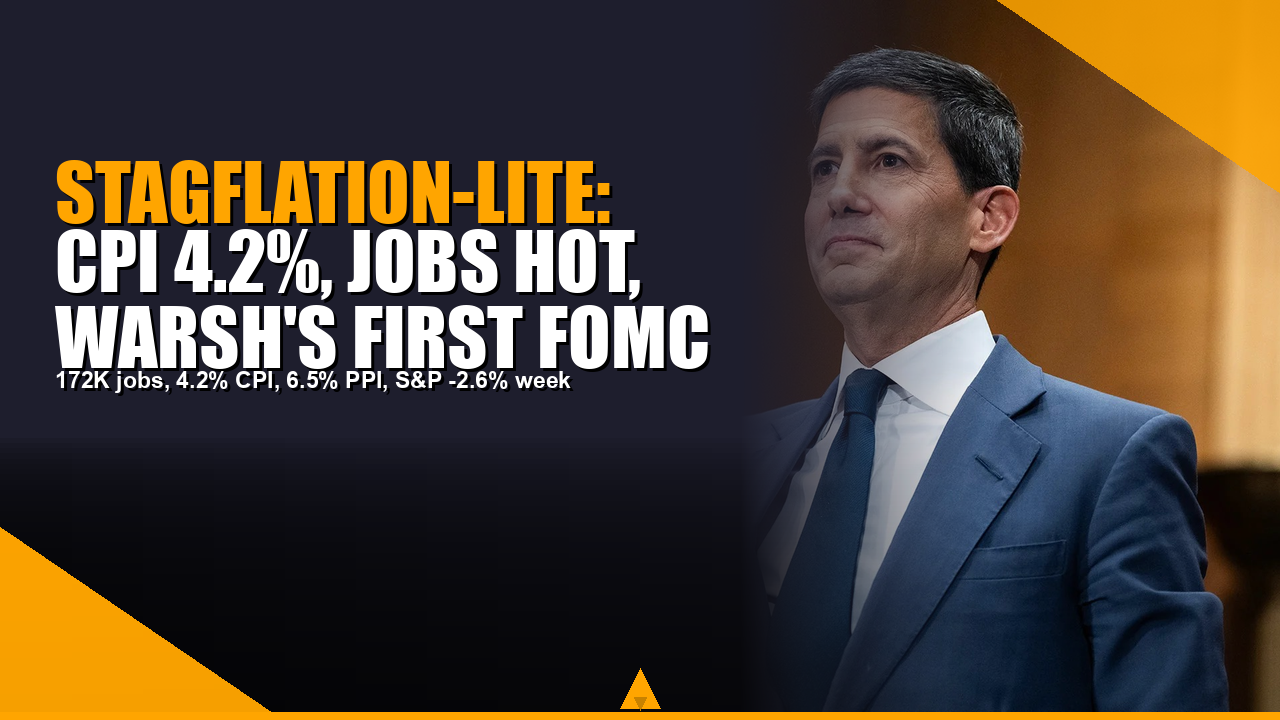
If you had to design a week to make Kevin Warsh's first FOMC meeting as uncomfortable as possible, you could not have done better than this one. Jobs came in nearly double expectations. CPI hit the highest reading since April 2023. PPI ran at the hottest level in three and a half years. Oracle posted record revenue and the stock got hammered on capex. The S&P 500 had its worst week of 2026, and the 10-year Treasury yield popped to 4.55%.
The narrative for May was "we are in late-cycle expansion." The narrative for June, four data points later, is something less comfortable: stagflation-lite. Hot prices, hot jobs, slowing tech, and a Fed Chair who has spent his entire career arguing that the central bank should not flinch. Here is what actually happened, what the bond market is saying, and how to position into the June 16-17 meeting.
May Jobs Doubled Expectations — And Revised April Up By 64,000
Friday's payrolls print was a shock. Nonfarm payrolls grew by 172,000 in May versus the 85,000 economists expected — a more than 2x beat. Unemployment held at 4.3% for the third straight month. But the headline number was not the real story. The real story was the revisions: April was revised up from 115,000 to 179,000 — a 64,000 upward revision that wiped out half of the "labor market is rolling over" thesis the bond market was building.
Leisure and hospitality added 70,000 jobs, local government added 55,000, healthcare added 35,000. These are the service-sector areas that lead labor demand into a slowdown. They did not roll over. Initial jobless claims did tick up to 225,000 — a four-month high — but the trend is still nowhere near recession-signal levels.
For a Fed Chair preparing his first decision, this is the worst possible setup. A genuinely weak labor market would let him hold rates without controversy. A labor market that is still creating 170k jobs a month while inflation is accelerating is a labor market that does not need rate cuts — and might justify hikes.
CPI Hit 4.2% — Highest Since April 2023
Wednesday's CPI delivered the second blow. Headline CPI rose 0.5% in May, putting the year-over-year reading at 4.2% — the highest annual print since April 2023, and a clean acceleration from 3.8% in April. Core CPI rose 0.2% on the month, with the annual core rate ticking up to 2.9% from 2.8%.
The energy story is what makes this complicated. Energy prices were up 3.9% on the month and 23.5% year-over-year, driven by the Iran-related disruption to Middle Eastern oil supplies. Gasoline alone is up 40.5% year-over-year — a number that shows up in every household's monthly budget. Energy accounted for over 60% of the headline CPI increase in May.
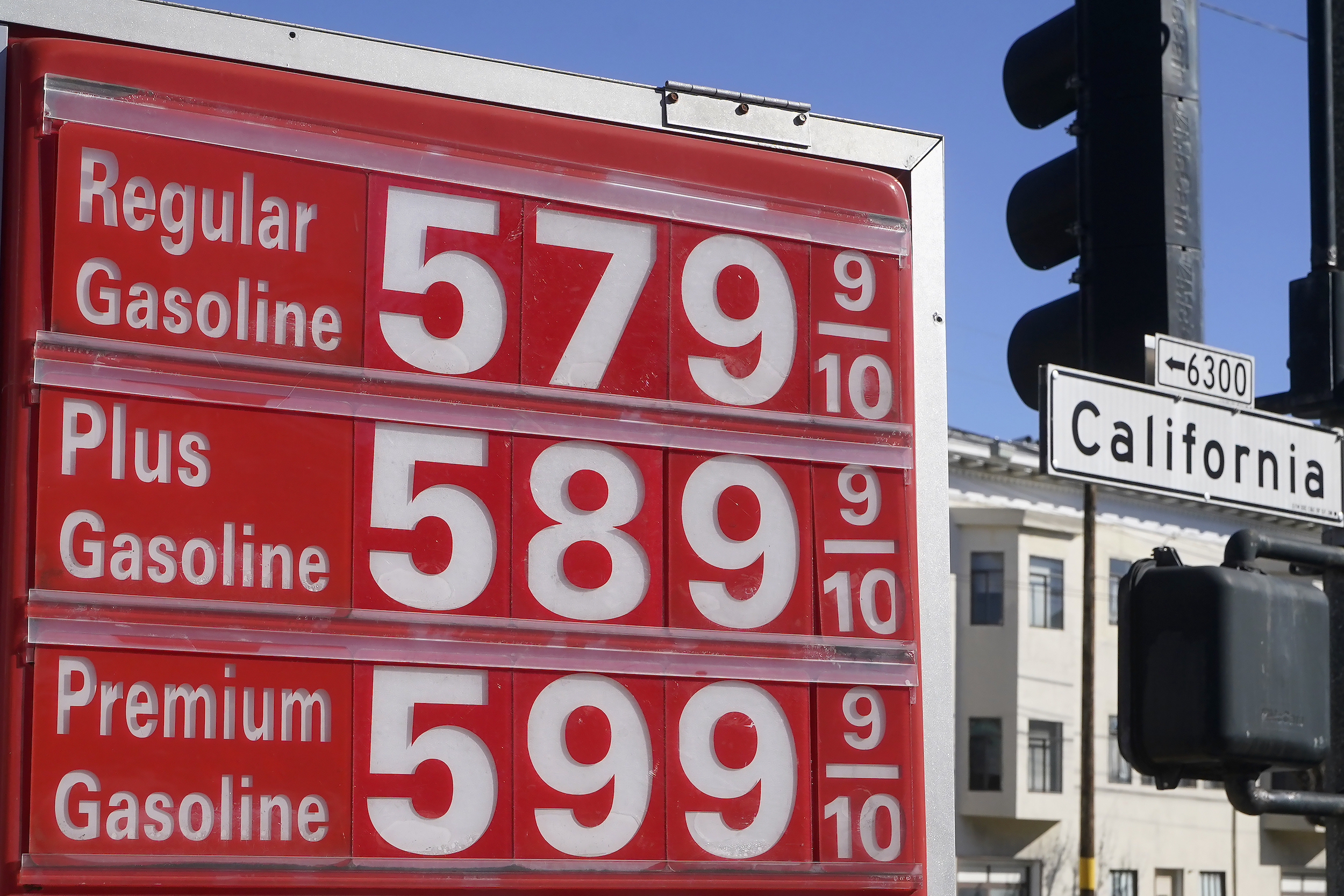
The bullish counter is that core CPI is still 2.9% — not far from the Fed's 2% target — and shelter inflation cooled to 0.3% from 0.6% in April. Used cars and new cars both declined. Motor vehicle insurance dropped 1.7% after months of gains. If you strip out the geopolitical energy shock, the underlying picture is closer to mid-2024 inflation than to a 1970s spiral.
But the Fed has to make a decision on the headline number, not on counterfactuals. And the headline number is heading the wrong direction for the third month running.
PPI Just Made It Worse
Thursday's PPI was the third leg of the inflation triple. Producer prices rose 1.1% on the month — matching April's pace and well above the 0.7% consensus. Year-over-year PPI is now 6.5%, the highest since November 2022. Goods prices alone soared 2.8% on the month, with over half the increase coming from a 23.4% surge in gasoline.
PPI matters because it is the pipeline. Producer prices feed into consumer prices on a six-to-twelve-month lag. A 6.5% PPI print in May means the inflation pressure for late 2026 is already in the system. Core PPI was a touch better at 0.4% versus 0.5% expected, but the trend is unambiguous: input costs are rising faster than at any point in the post-COVID cycle outside of 2022.
Combine NFP + CPI + PPI and you have the textbook setup that triggers the "is the Fed behind the curve again?" debate. Cleveland Fed's Loretta Mester is already on tape saying a rate hike "could come as early as later this summer." That is not a base case yet — Reuters' survey of 102 economists has 72 expecting rates to stay at 3.50-3.75% through year-end — but it is now in the conversation.
Oracle's Record Quarter Got Punished For The Right Reason
Wednesday after the close, Oracle reported fiscal Q4. Revenue grew 21% year-over-year to $19.18 billion, beating estimates. Adjusted EPS came in at $2.11 versus $1.96 expected. Full-year FY27 EPS guidance was raised to $8.05. Q1 FY27 revenue is projected to grow 27-29%, with Oracle Cloud Infrastructure expected to grow over 70% — explosive numbers for a company this large.
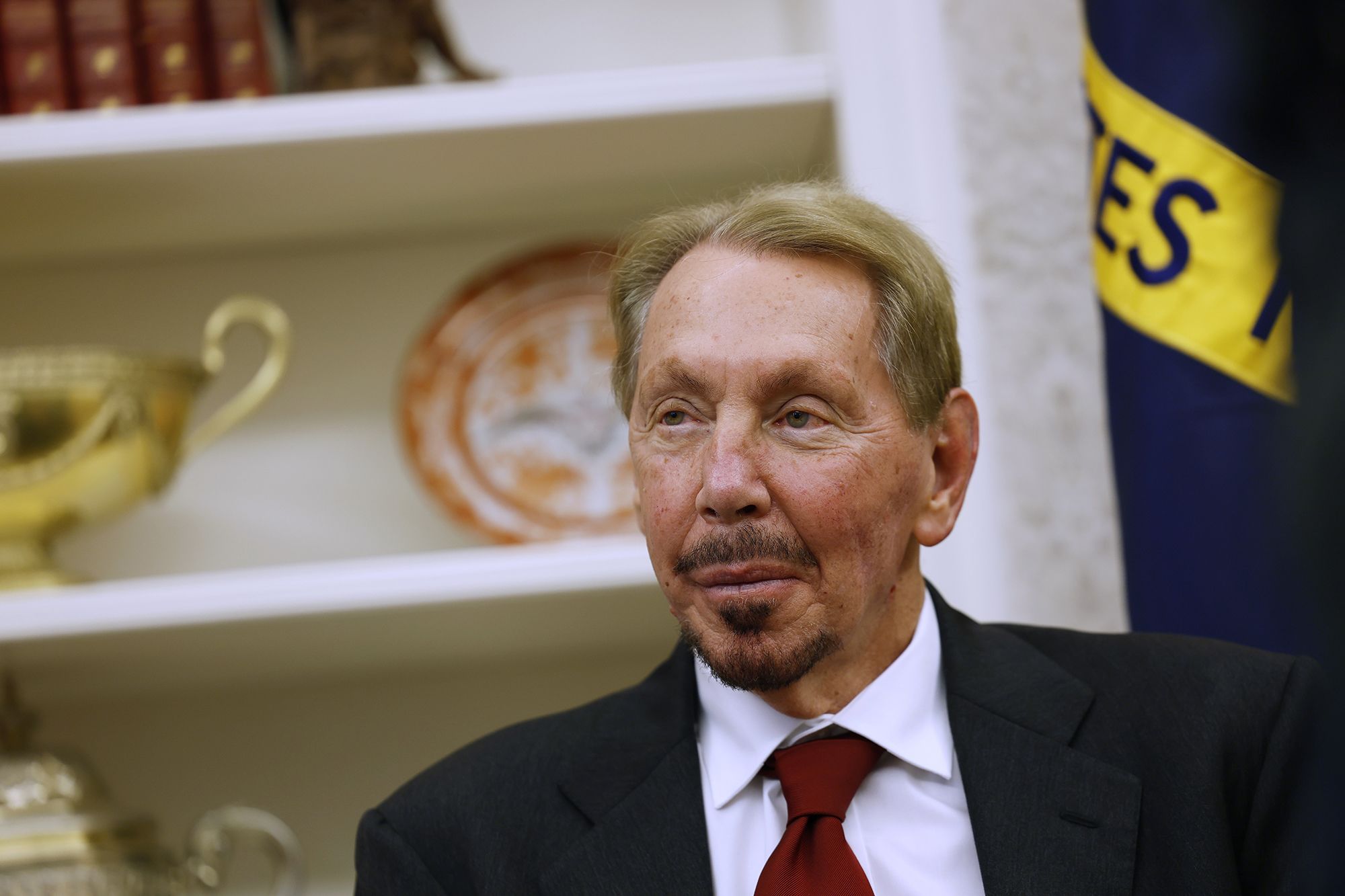
So why did the stock open down 8.5%? Capital expenditures. Oracle's capex came in approximately $5 billion above expectations as Ellison continues to build out data center capacity for the OCI cloud business. The company also added $20 billion to its planned capital raise. The market is asking the same question it asked Broadcom last week and Nvidia three weeks ago: what is the actual return on this capex, and when does it show up in margins?
This is the same pattern. Broadcom — $10.8B in AI revenue, stock fell. CrowdStrike — 26% revenue growth and a 4-for-1 split, stock fell. Oracle — 21% revenue growth and a guidance raise, stock fell 8.5%. The market has fundamentally repriced what it requires from AI-adjacent names. Beat-and-raise on revenue is no longer enough. The new standard is beat-and-raise with operating leverage, and the AI capex cycle is making that hard for everyone.
The Bond Market Is Doing the Hike For Him
Here is what makes Warsh's first meeting genuinely fascinating. The bond market is already tightening for him. The 10-year Treasury yield rose from 4.44% to 4.55% on the week — an 11 basis point move on hot data. The 30-year remains stuck near 5.00%. Mortgage rates are back above 7.25%. Credit spreads have widened modestly. Financial conditions tightened all week without the Fed lifting a finger.
For a chair who has publicly criticized the Fed's communications style and questioned the dot plot, this is a clean setup. Warsh can hold rates, sound hawkish on the press conference, point to the bond market doing the work, and avoid both the political pressure to cut and the analytical embarrassment of cutting into accelerating CPI. The base case from JPMorgan, T. Rowe Price, and most major banks is a hold with a hawkish lean — explicit removal of any "bias toward easing" language.
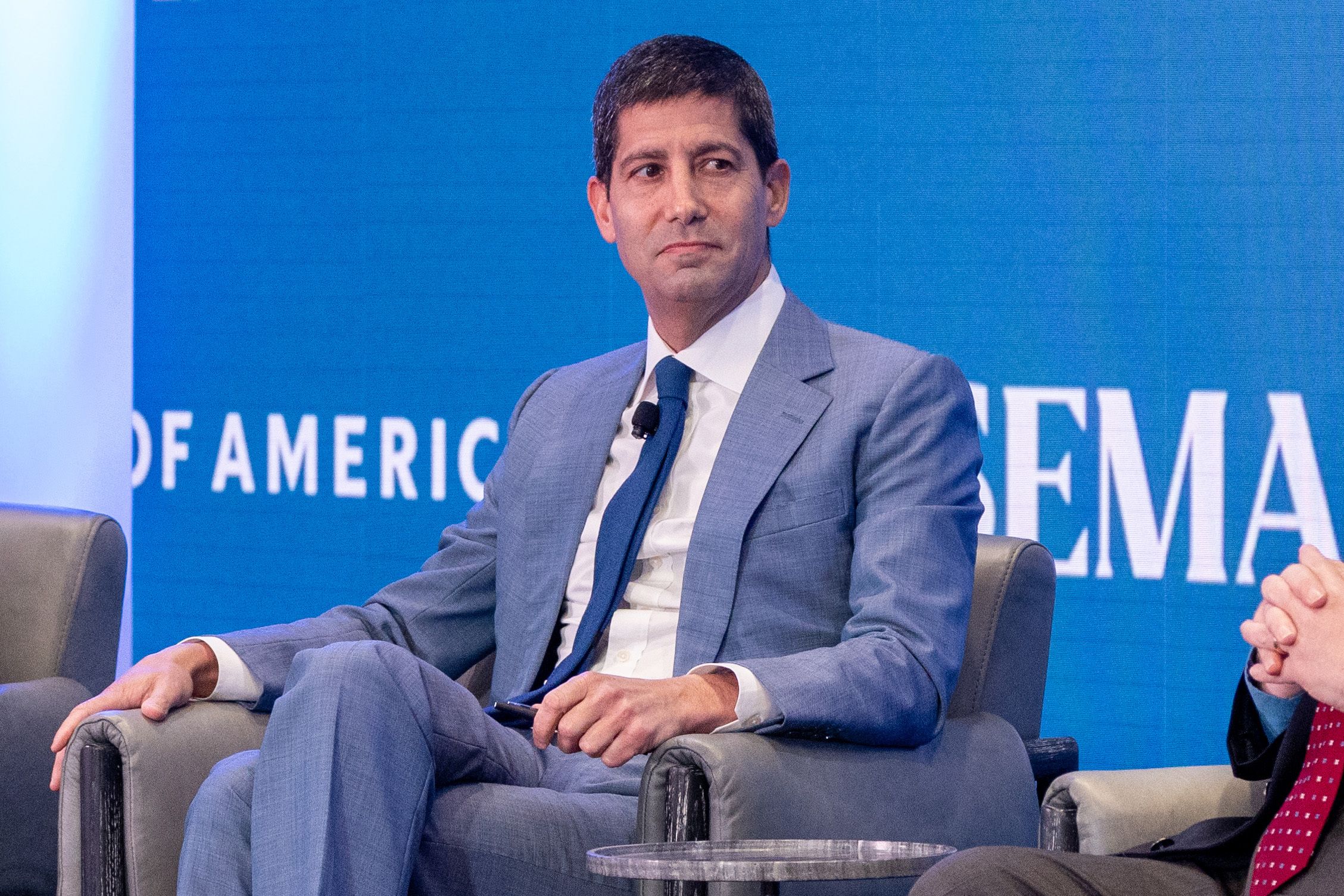
The unknown is the press conference. Warsh has spent six months telegraphing framework changes — trimmed-mean inflation, balance sheet shrinkage, deemphasizing the dot plot. If he uses the June 17 press conference to formally introduce any of those changes, the market reaction will be much larger than the rate decision itself. Watch the language. Listen for "trimmed-mean," "scarce reserves," or any direct critique of the dot plot. Each of those is a regime signal.
Five Lessons From This Week
1. The inflation trade is back. CPI at 4.2% and PPI at 6.5% reset the inflation conversation for the second half of 2026. Energy, materials, and short-duration value stocks have just gotten a tailwind. Long-duration growth has just gotten a headwind. Position accordingly.
2. The Fed cut narrative is dead until 2027. Reuters' economist survey moved decisively to "no cuts in 2026." The probability of a hike this summer is now non-trivial. Until the long end of the curve breaks below 4.30% or jobless claims spike above 280k, do not fight this.
3. AI capex is the new earnings risk. Three quarters in a row, AI-exposed names beat on revenue and got sold on capex. Until the market sees operating leverage, the multiple compression continues. Watch capex-to-revenue ratios on every Q3 print.
4. Energy is the swing variable. The Iran disruption is what turned a 3.8% CPI print into a 4.2% one. Watch the Strait of Hormuz, OPEC headlines, and U.S. SPR releases. If oil breaks above $115, the entire 2026 macro setup re-rates again.
5. The Warsh press conference is the trade. The rate decision is locked in. The framework signals are not. Anyone trading off the June 17 meeting should be listening, not watching the dot plot.
Week Ahead
Monday and Tuesday are quiet ahead of the FOMC blackout. The June 16-17 meeting is the main event — rate decision Wednesday afternoon, Summary of Economic Projections updated, and Warsh's first live press conference as Chair. Expect language changes, potentially significant ones. Retail sales drop June 17 morning, just before the FOMC release. Initial jobless claims Thursday.
For positioning: if you are long duration, this is the week to take size off. If you are long AI-capex names, revisit position sizing into the meeting. If you are long energy or short-duration value, you have the wind at your back for the first time in months. The narrative that defined the first half of 2026 — disinflation plus AI capex plus eventual cuts — is no longer the trade. The new trade is sticky inflation plus capex discipline plus a chair who is comfortable saying no.
Markets do not reward conviction. They reward investors who can change their minds when the data changes. The data changed this week.
If you want our live commentary on the June 17 FOMC press conference and weekly market briefings as they happen, join our Telegram community: https://t.me/+6VRTM83FVqEwZDll
Together, Next Level.



.png)


