.png)
Investing
Buffett's $373B Cash War Chest: What He Knows That You Don't

Warren Buffett just did something that should make every investor pay attention. In a single week in late March, Berkshire Hathaway purchased $17 billion in US Treasury bills. Not stocks. Not acquisitions. Treasury bills -- the safest, most boring investment on the planet.
Meanwhile, the company is sitting on a record $373 billion cash war chest. That is more cash than Apple, Amazon, Alphabet, and Microsoft combined. It is the largest corporate cash position in history. And it belongs to a man who built his fortune by buying stocks, not avoiding them.
So why is the greatest investor of all time hoarding cash like the financial world is about to end?
The answer reveals everything you need to know about how to position your portfolio in 2026.
The $373 Billion War Chest
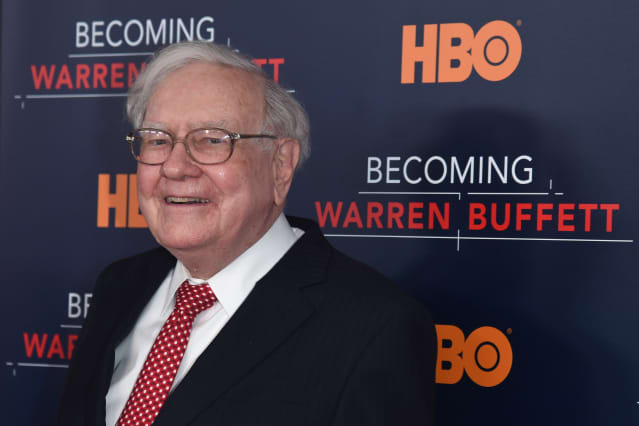
Let us put this number in perspective. Berkshire Hathaway's cash reserves have grown from $128 billion before the pandemic to $373.3 billion at the end of 2025. In three years, Buffett tripled his cash pile -- not by earning more, but by deliberately selling stocks and parking the proceeds in short-term treasuries.
The numbers are staggering:
- $373.3 billion in cash and Treasury bills at year-end 2025
- 4.89% of the entire US T-bill market -- more than the Federal Reserve holds
- ~$12 billion per year in risk-free interest income from sitting on cash
- 13 consecutive quarters as a net seller of stocks
- Over $134 billion in net stock sales in 2024 alone
During his exclusive interview with CNBC, Buffett disclosed that Berkshire bought $17 billion in T-bills in a single week. He was blunt about his reasoning: "If there is a big decline, we will be ready."
This is not a man who has lost faith in the stock market. This is a man who has built his career on one principle: be greedy when others are fearful, and be fearful when others are greedy. Right now, with the market cap-to-GDP ratio flashing red and geopolitical risks elevated, Buffett sees a market priced for perfection -- and he would rather earn $12 billion a year risk-free than overpay for stocks.
Why Buffett Sold 75% of His Apple Shares
Perhaps nothing illustrates Buffett's caution more clearly than what he did with Apple -- for years, his single largest and most beloved holding.
Over the course of 2024 and 2025, Buffett slashed his Apple position by approximately 75%. He sold hundreds of millions of shares, trimming the position from roughly 900 million shares to around 228 million. Even after the massive sell-off, Apple remains Berkshire's number one holding at about $62 billion, representing 22.6% of the equity portfolio.
Why would someone who famously said he would "never sell Apple" dump three-quarters of his stake? The answer comes back to valuation. At over 30 times earnings, Apple was priced for perfection. Buffett does not look at stock charts -- he looks at discounted cash flow models. And the math told him to take profits.
He also trimmed or exited positions in Amazon, Bank of America, and several other holdings. In 2025 alone, Berkshire sold over $24 billion in equities. The message was clear: at these prices, cash is more attractive than stocks.
Greg Abel Takes the Wheel
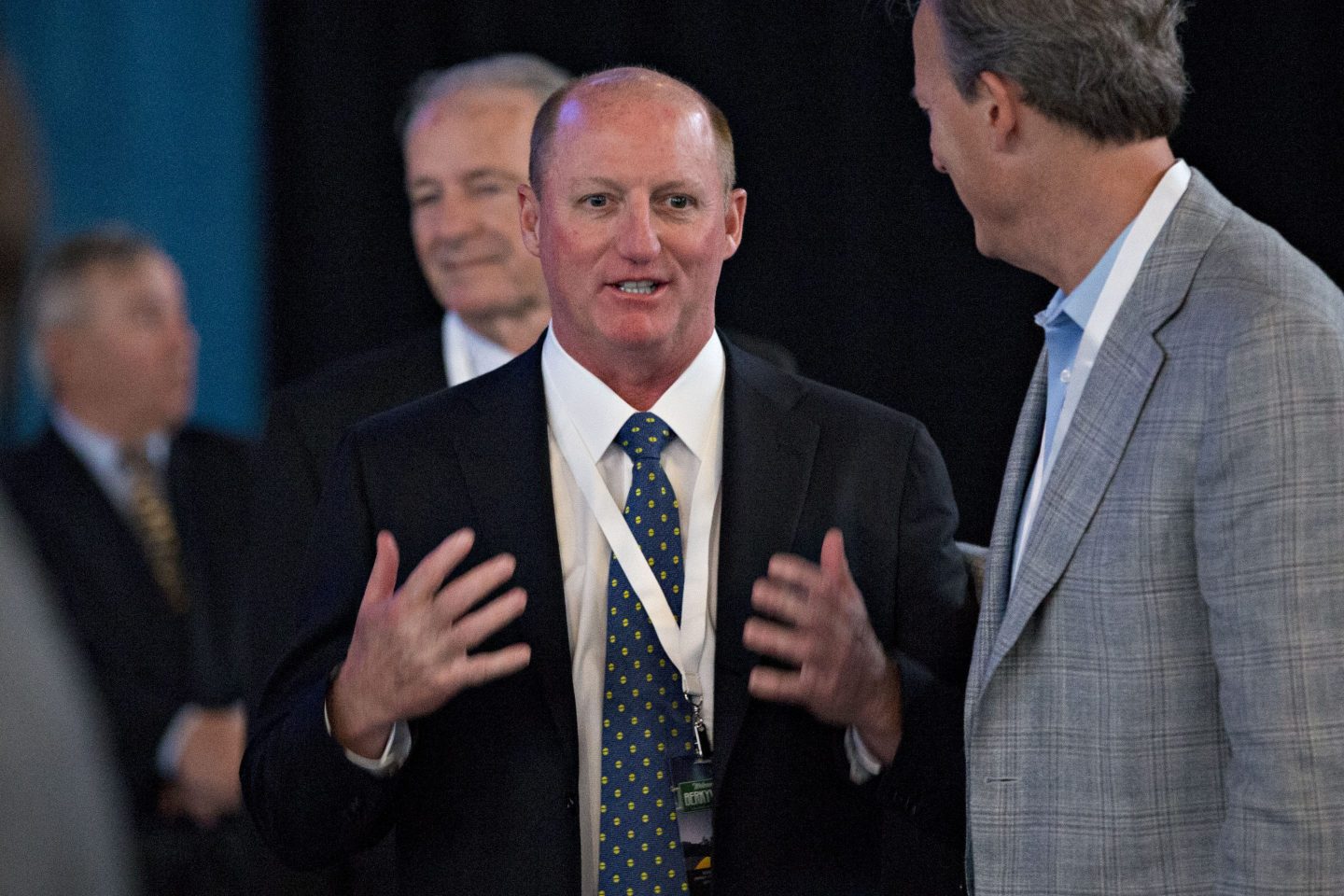
Warren Buffett stepped down as CEO at the end of 2025, handing the keys to Greg Abel. And Abel wasted no time making changes.
His first major move? Resuming share buybacks. After a 21-month pause under Buffett (the longest in Berkshire's modern history), Abel restarted stock repurchases right after the 10-K filing's 48-hour waiting period. He confirmed that the timing and valuation were discussed directly with Buffett, who was "very supportive" and described the move as "so Berkshire."
Abel also put his money where his mouth is -- literally. He invested $15.3 million of his own salary to buy 21 Class A shares and has committed to repeating this annually for as long as he serves as CEO.
But beyond buybacks, Abel is signaling meaningful shifts in the portfolio:
- Core holds: Apple, American Express, Coca-Cola, and Moody's have been identified as long-term, "untouchable" positions
- On the chopping block: Abel was notably silent on Bank of America, Chevron, Chubb, and Alphabet -- hinting they may be trimmed or sold
- Kraft Heinz: Called "disappointing" by Abel, suggesting Berkshire may finally exit this underperforming investment
- Japan stocks: Abel highlighted these as "comparable to major US holdings in importance and long-term value creation"
- New additions: Berkshire added New York Times Company and a $4.3 billion Alphabet stake under Abel's watch, plus $1.8 billion in Tokio Marine
The transition from Buffett to Abel is not just a change in leadership. It is a shift in philosophy -- from extreme patience and cash accumulation to a more active deployment strategy. Abel appears ready to put the war chest to work when the right opportunities emerge.
What Buffett's Cash Pile Tells Us About the Market

When the greatest investor in history chooses to sit on $373 billion in cash rather than buy stocks, it tells you something important about how he sees the market.
Buffett has lived through dozens of market crashes. In 2008, when the financial system was collapsing, he invested $5 billion in Goldman Sachs on terms that netted him over $3 billion in profit. In 2010, he pledged to always keep at least $10 billion in cash. Today, his war chest is 12 times the 2008 number.
Whitney Tilson at Stansberry Research put it plainly: "I've heard from a credible source that Buffett was worried about a sharp market pullback."
The indicators support this view:
- Goldman Sachs has raised US recession odds to 30%
- Moody's puts the probability at 49% within 12 months
- The Fed is holding rates at 3.5-3.75%, with only one cut expected in 2026, as oil prices from the Iran conflict push inflation higher
- The market cap-to-GDP ratio remains elevated, suggesting stocks are expensive relative to the economy
- Oil prices surged past $111 per barrel after Strait of Hormuz disruptions, adding pressure to both consumers and corporate margins
Buffett's strategy is not complicated. He is waiting for the moment when capital dries up, credit markets freeze, and high-quality companies become desperate for liquidity. When that happens, $373 billion is not just money -- it is a structural advantage that allows Berkshire to dictate terms no other institution can match.
The Lesson for Retail Investors

You do not need $373 billion to invest like Buffett. His principles scale down to any portfolio size. Here is what retail investors can take from his current positioning:
1. Cash is not dead money. Buffett calls it "financial ammunition." In a market where T-bills yield 3.5-4%, holding some cash is not a sign of weakness -- it is a strategic position. It gives you the ability to buy quality assets at discounted prices when others are forced to sell.
2. Look at businesses, not stock prices. Buffett's favourite test: does a 30% drop in share price change how many Coca-Colas people will drink next year? Does it change how many people will use their American Express card? If the answer is no, the intrinsic value has not changed -- only the market's mood has.
3. Be greedy when others are fearful. Since 1965, Berkshire shares have compounded at 19.9% annually -- nearly double the S&P 500. The secret? Buying aggressively during panics while everyone else runs for the exits. The 2008 Goldman Sachs deal, the 2020 pandemic buys -- all came during moments of maximum fear.
4. Time in the market beats timing the market. Buffett does not recommend waiting for a crash to invest. He warns that staying out of the market costs time, and time is the most valuable tool in investing. His point is simpler: if prices drop, do not run. That is the moment to pay attention.
5. Diversify beyond the obvious. Abel's emphasis on Japanese stocks and Berkshire's energy positions tell a story about geographic and sector diversification. If your entire portfolio is in US tech stocks, the world's best investors are telling you to broaden your horizons.
What to Watch Next
The next few months will be critical for markets and for Berkshire Hathaway under Greg Abel:
- Berkshire's Q1 13F filing will reveal whether Abel has made major portfolio changes -- watch for moves on Bank of America, Chevron, Alphabet, and Kraft Heinz
- The Iran conflict resolution could trigger a sharp drop in oil prices, relieving pressure on consumers and boosting risk assets
- The Fed's April 29 decision will signal whether rate cuts are back on the table, or if oil-driven inflation keeps them on hold
- Berkshire's deployment of cash -- any major acquisition or investment by Abel could signal that the "buy" moment has arrived
Warren Buffett did not build a $373 billion war chest because he was scared. He built it because he was prepared. He spent his entire career proving that the best time to have cash is when nobody else does.
The question is: when the opportunity finally arrives, will you be ready too?
What if you could be the first to uncover the latest trends, insights, and opportunities?
Dive into our community today and get a head start on the market!
Get exclusive access to cutting-edge updates, expert opinions, and must-know news -- all in one place.
STAY AHEAD OF THE GAME!
Let's Build Wealth & Give Wealth!
Together, Next Level


.png)


