.png)
Investing
Bonds Beat Nvidia: When the 30-Year Runs the Market
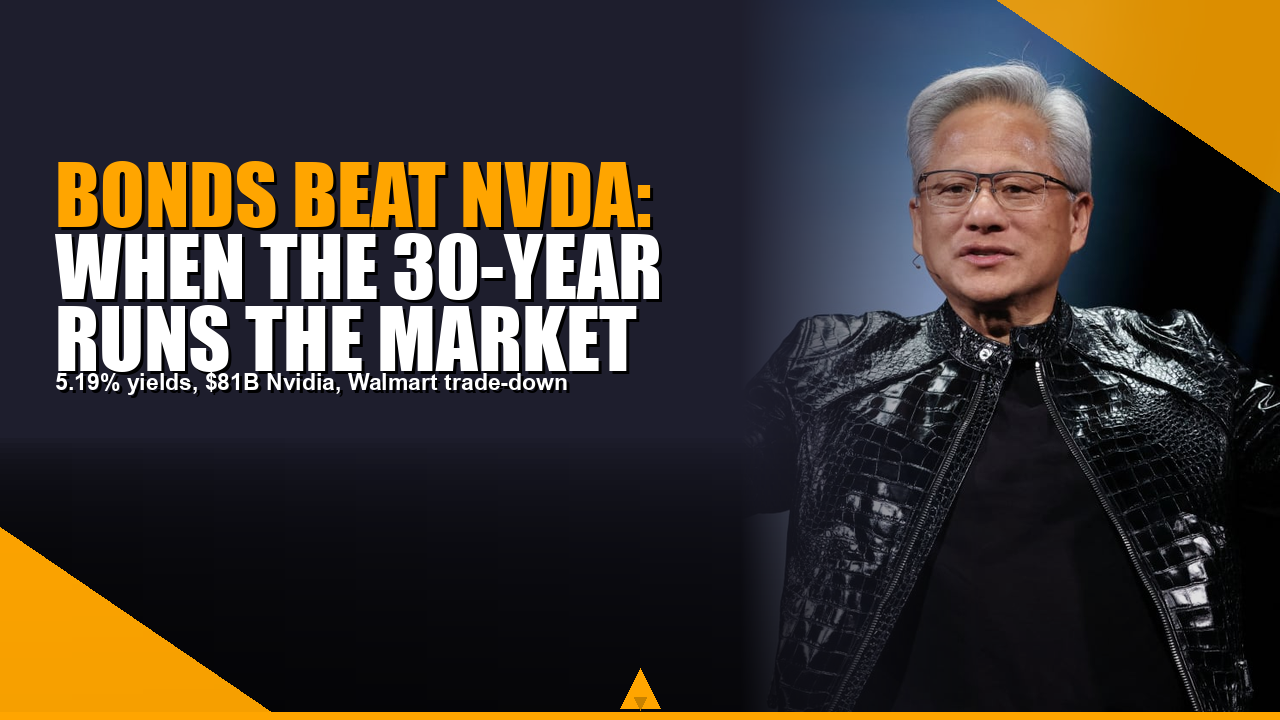
On Wednesday after the close, Nvidia reported the kind of quarter that, in any other year, would have launched the S&P 500 a hundred points higher by Thursday morning. Revenue of $81.62 billion, up 85% year-over-year. Data center revenue of $75.2 billion, roughly double last year. Q2 guidance of $91 billion, well ahead of consensus. Earnings per share of $1.76.
The S&P 500 closed Thursday roughly flat. Nvidia itself finished the week barely higher. Why? Because while Jensen Huang was on stage talking about Rubin and the next leg of AI capex, the 30-year Treasury yield was quietly breaking out to 5.19%, the highest level since before the 2008 financial crisis. The bond market is back, and this week it made very clear who is actually setting the price for risk.

The 30-Year Tells the Real Story
The benchmark 30-year US Treasury yield touched 5.19% on Monday, then closed the week above 5.10%. That is the highest level since 2007. The 10-year crossed 4.65%. The term premium, which is the extra yield investors demand for owning long-dated paper, has expanded sharply over the last two weeks. This is not about Fed funds policy. It is about the price of US fiscal and inflation risk.
The trigger is a stack of overlapping concerns. The April CPI came in hot at 3.8%. Iran tensions kept oil above $100 for most of the month. The Treasury is set to issue another wave of long-dated paper into a market that is no longer convinced 2% inflation is the destination. Global yields are spiking too. UK 30-year gilts hit their highest level in years. Japan, Germany, and France all moved higher.
For retail investors, the takeaway is mechanical and uncomfortable. When long-end yields rise, the present value of every future cash flow falls. That hits the most expensive stocks first. Software, biotech, unprofitable growth, anything trading on a multiple of revenue. The bond market is forcing valuations to compress, even when earnings are good.
Nvidia Beat. It Did Not Matter
Let us go back to the Nvidia print, because it deserves real respect. Data center revenue alone of $75.2 billion was up roughly 100% year-over-year and now accounts for 92% of total sales. Hyperscaler customers contributed about $38 billion, up 12% sequentially. The remaining $37 billion came from AI clouds, industrial, and enterprise, which is the segment that proves AI adoption is broadening beyond the hyperscalers.
Guidance was the kicker. Q2 of $91 billion at the midpoint implies another 12% sequential growth, on a base that has already roughly doubled in a year. There is no other large-cap company on the planet growing at this scale.
And yet the stock barely moved. That tells you something important about where we are in the cycle. When a 92%-data-center-mix beat-and-raise gets a yawn from the market, you are in an environment where rates are doing the heavy lifting. This is not a Nvidia problem. It is a duration problem. Investors are repricing every long-duration cash flow in the market against a 5%-handle 30-year. Even Nvidia is not immune.
Walmart Confirms the K-Shaped Consumer
Thursday morning, Walmart reported Q1 FY27 with total revenue up 7.3% year-over-year (5.9% in constant currency). The headline that mattered: US comparable sales excluding fuel grew 4.1%, above the 3.9% consensus and at the top of the company's own guided 3.5% to 4.5% range. Operating income grew 5%. Global ad and membership revenue grew at a 26% clip.
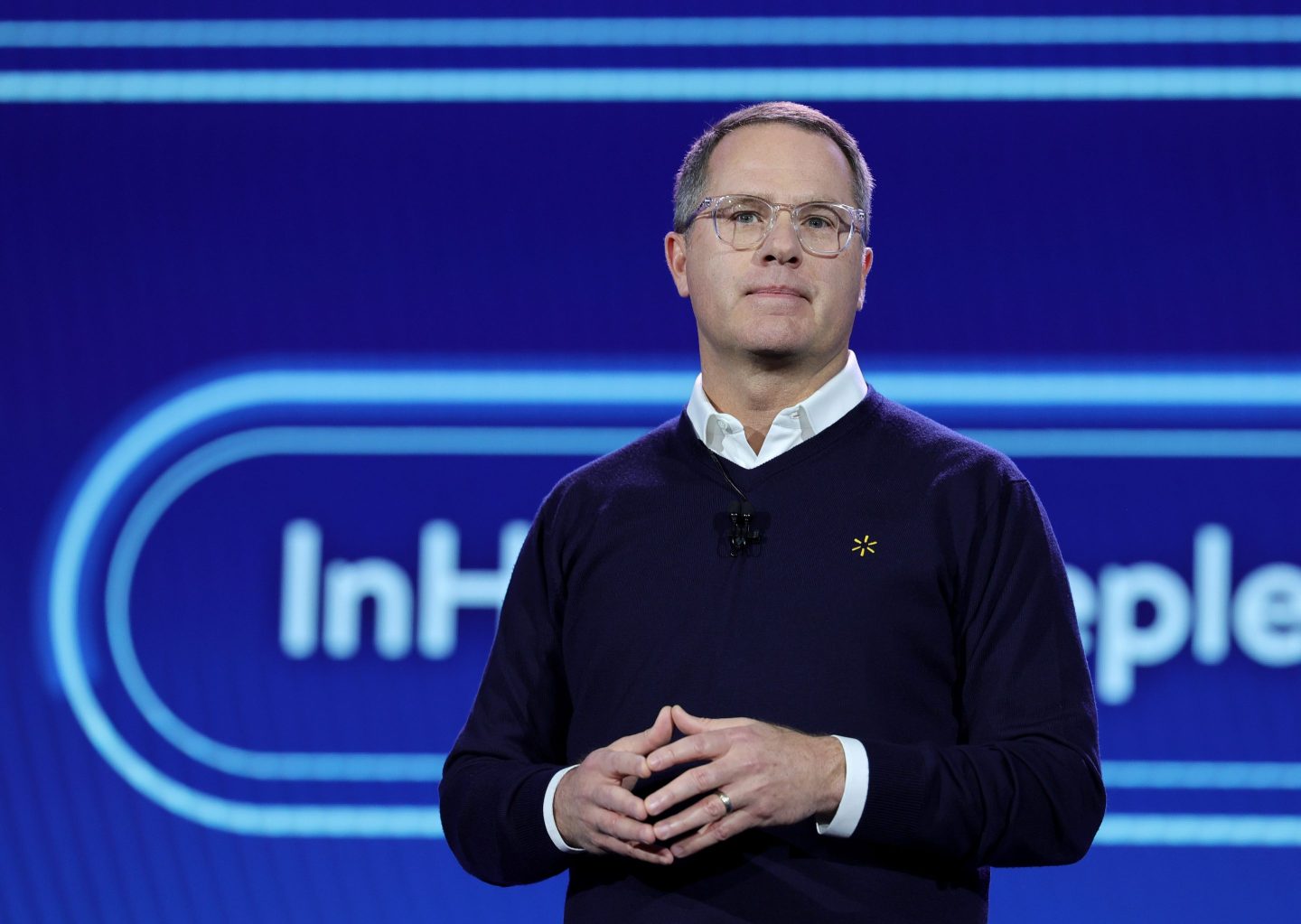
A 4.1% comp above the high end of guidance is not just "demand is holding." It is the textbook signal of trade-down. Higher-income households who used to shop at premium grocers are showing up at Walmart, particularly in the fresh categories and apparel. We saw this same pattern in 2008 and 2022. It is consistent with what April CPI told us: real wages are negative, gas is up 28% year-over-year, and consumers are getting smarter about where they spend the dollar they have.
For your portfolio, that means the consumer discretionary names with mid-market positioning are most at risk: casual-dining chains, specialty apparel, and home improvement above the basic price points. Walmart, Costco, the dollar stores, and the off-price retailers (TJX, Ross) are positioned to take share.
Warsh's Opening Move Is Not What Markets Hoped
Kevin Warsh took office on Monday. In his first week of commentary, several signals are emerging that markets had not fully priced in. He wants to shrink the Fed balance sheet faster. He has questioned whether the FOMC needs to meet eight times a year, and whether the dot plot should continue at all. Most importantly, he is publicly advocating that the Fed look at trimmed-mean inflation measures, which strip out one-off shocks, rather than headline CPI.
Read that carefully. Warsh is not preparing the ground for cuts. He is preparing the ground for a different way of measuring inflation that would, in his view, give the Fed more credibility to hold or even hike if generalized price pressure proves sticky. CME FedWatch is now pricing essentially zero chance of a cut in 2026 and a non-trivial probability of a hike at some point. That is a complete narrative inversion from where we were three months ago.
For the market, this means the simple "Powell out, cuts in" thesis is dead. Position for a Fed that is structurally more conservative, more focused on inflation credibility, and less likely to bail out asset prices when growth slows.
Iran Strike Called Off, Oil Eased
One bright spot for risk assets came Monday afternoon when President Trump announced he was calling off a planned strike on Iran at the request of Gulf allies. Brent dropped from near $112 back toward $100, and WTI followed. Markets rallied briefly on the news before the bond move overpowered it.

The geopolitical risk premium in oil is still real, just smaller than it was last week. For investors, that opens an interesting window: energy stocks have pulled back five to seven percent from their May peak. If you are underweight energy and have been waiting for a better entry, this dip is worth looking at, especially in the integrated majors with proven dividend coverage at $80 oil.
Five Lessons From This Week
Here is what I want every Next Level student to take away:
1. Bond yields are the master variable now. When the 30-year is at 5%, every multiple in the equity market needs to be re-examined. Use this period to stress-test your highest-multiple holdings against a higher-for-longer scenario.
2. Beat-and-raise stopped being enough. Nvidia just proved it. When the market does not reward the world's best earnings story, the bottleneck is macro, not micro. Trim positions where the valuation is doing all the work.
3. The K-shaped consumer is widening. Walmart taking share at 4.1% comp is a flashing yellow light for mid-market discretionary. Audit your consumer exposure.
4. Warsh is not Powell-but-easier. He may be more market-friendly in style, but his substance is harder on inflation and harder on Fed reach. Position for a slower cutting cycle than the consensus still expects.
5. The fiscal trade matters. Term premium expansion is partly about US fiscal trajectory. Gold at $4,750 and Bitcoin retesting highs are both responses to that. A small allocation to both still earns its place in a balanced book.
Week Ahead
Next week brings the April PCE inflation print on Friday, the May FOMC minutes (which will be the last set we get from the Powell-chaired committee), and earnings from Costco, Salesforce, CrowdStrike, and Best Buy. Warsh is scheduled to give his first substantive policy speech, and the Treasury is auctioning another tranche of long-dated paper that will be a key test of demand.
The signal to watch is the 30-year yield. If it holds above 5%, the pressure on equity multiples continues, and rotation into value, quality, and energy accelerates. If the bond market gets relief from softer PCE or a successful auction, expect a sharp relief rally in tech and rate-sensitive names. Either outcome creates opportunity. Stay diversified, keep cash on the sidelines, and read the yield curve before you read the headlines.
If you want to discuss this week's setup with other investors, learn the frameworks we use to read yield curves, and get our weekly portfolio walkthrough, join us on Telegram: https://t.me/+6VRTM83FVqEwZDll
Together, Next Level.



.png)


