Investing
The Warsh Era Begins: No Dot, Five Task Forces, and an Iran Peace Deal
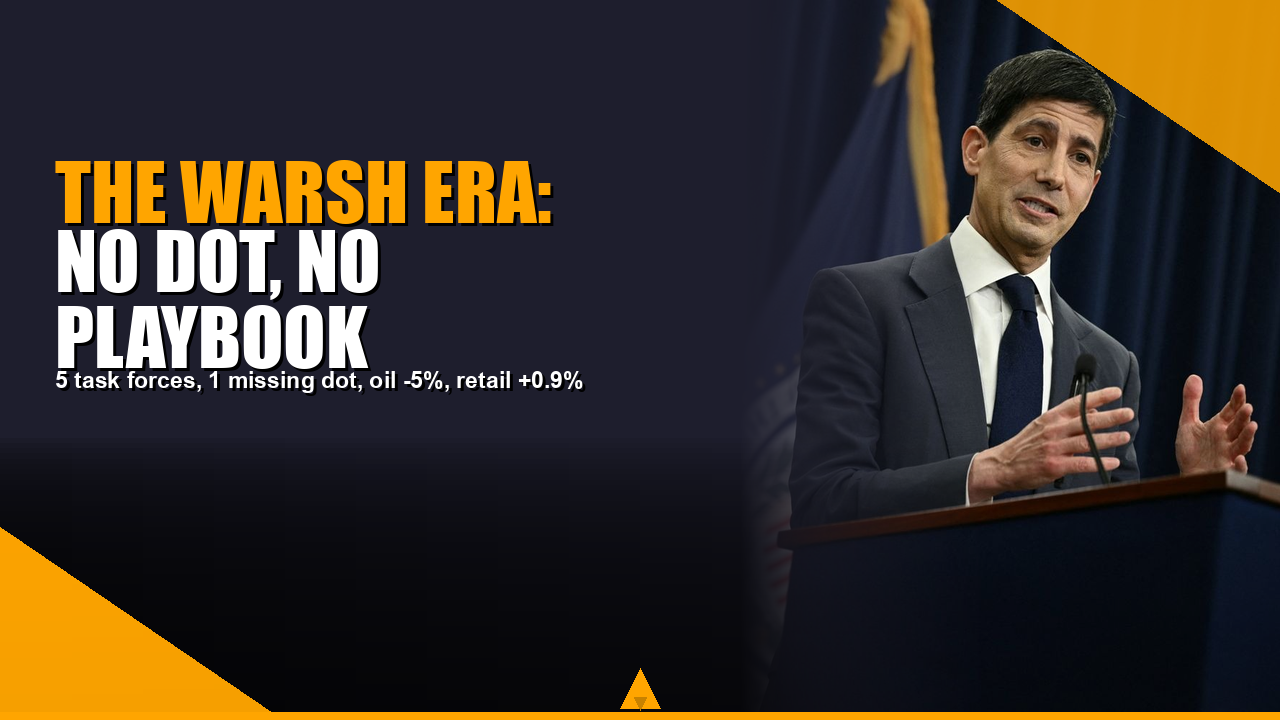
The Federal Reserve has a new chair, and this week he announced what the post-Powell era will actually look like. The Fed held rates at 3.50-3.75% on Wednesday, as expected. What was not expected was everything else. Kevin Warsh, in his first press conference, declined to submit his own dot plot, announced five permanent task forces to overhaul Fed operations, and let the median 2026 dot reset from neutral to a projected rate hike. Markets sold off on Wednesday, rallied on Thursday after a US-Iran peace deal collapsed oil prices, and closed the holiday-shortened week broadly higher.
This was not a meeting. It was a regime change. Here is what actually happened, why retail sales mattered more than people realize, and how to position into the back half of 2026.
The Dot That Was Not There
Wednesday's most interesting data point was a number that did not exist. The Summary of Economic Projections — the "dot plot" that every FOMC produces — was missing a submission. The median 2026 dot moved from "hold" to a projected quarter-point hike by year-end. Nine of nineteen officials now project at least one increase. But one official chose not to submit a projection at all, and that official is almost certainly Warsh himself.
In the press conference, he confirmed it indirectly. He explained that he had encouraged his colleagues to submit projections but that his "longstanding view" is that single-point forecasts of monetary policy create false precision. He has been on the record questioning the dot plot for years. As a sitting Chair, he is now demonstrating that view in real time. He led the meeting, set the policy decision, and refused to play the forward-guidance game that every chair since Bernanke has played.
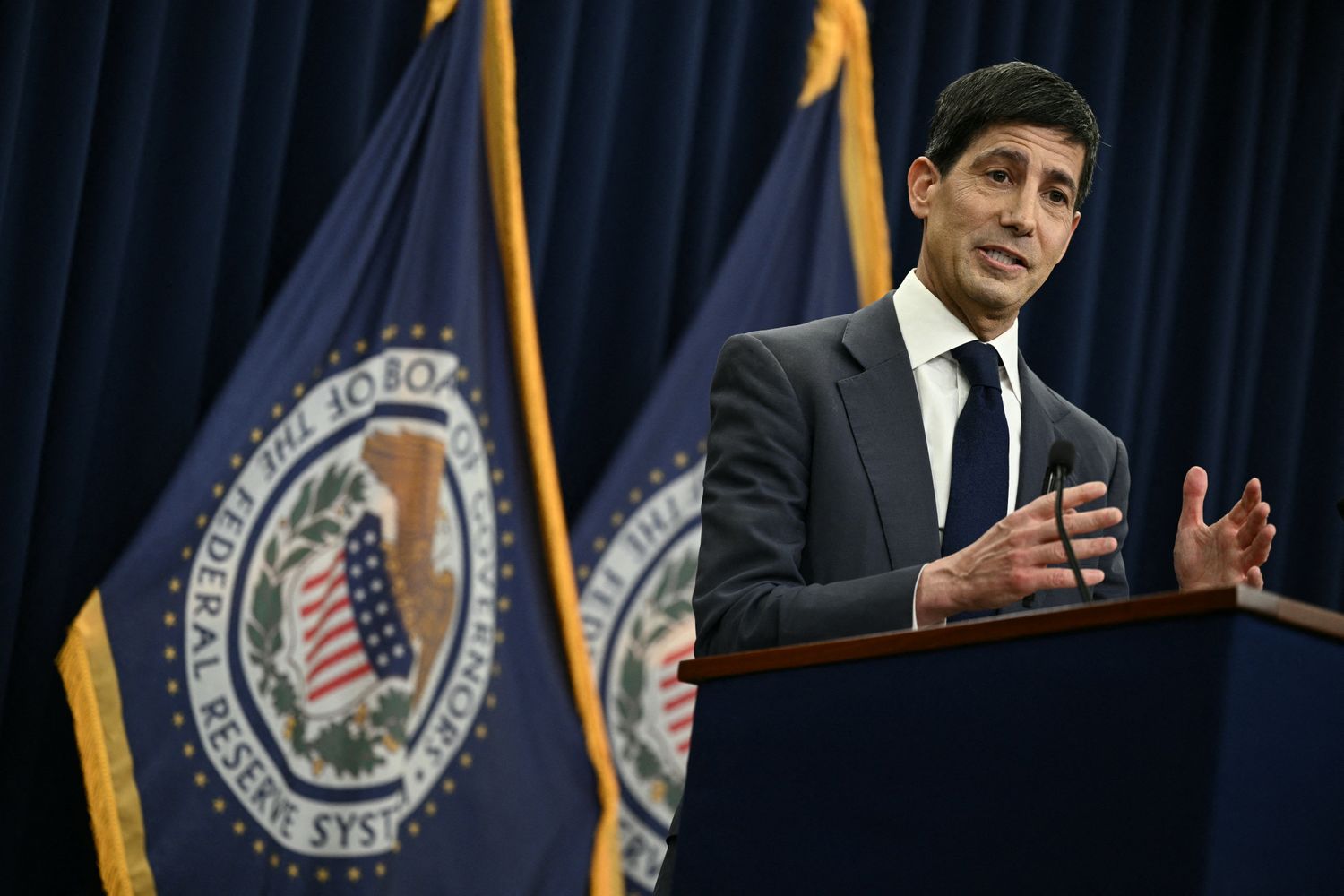
The market's reaction was instructive. The S&P 500 fell 1.2%, the Nasdaq dropped 1.3%, and the Dow lost more than 500 points after the announcement. Investors do not like ambiguity. The dot plot, for all its problems, gave traders a tradable forward curve. Without it, every Warsh sentence becomes a Rorschach test. Volatility went up, and it is going to stay up.
Five Task Forces — The Real Headline
Buried under the press conference noise was the announcement that may matter more than the rate decision. Warsh launched five permanent task forces examining:
Communications strategy — how the Fed talks to markets and the public. Translation: the dot plot, the SEP, and the press conference format are all up for review.
The balance sheet — the $5 trillion-plus portfolio that the Fed accumulated through quantitative easing. Warsh has publicly said scarce reserves should be the operating framework. This is the working group that will write that policy.
Data reliance — how heavily the Fed should weigh real-time economic data versus structural indicators. Warsh has been a long-time critic of the Fed's "data dependence," arguing it makes policy reactive.
Artificial intelligence and transformative technology — the productivity, labor market, and inflation implications of AI as a policy variable. No previous Fed chair has formalized this.
Operational efficiency — internal staff, processes, and decision-making.
These task forces are not academic exercises. They are the architecture of a different Fed. By the time Warsh delivers his first Jackson Hole speech in August, expect framework changes that materially affect how monetary policy gets transmitted to markets. For investors, the takeaway is simple: the Powell-era playbook of buying duration when the Fed turns dovish is on pause. The decision-making process is being rebuilt.
Retail Sales Said the Consumer Is Still Standing
Tuesday's retail sales report, almost lost in the FOMC noise, was a genuine surprise. May retail and food service sales jumped 0.9% month-over-month — nearly twice the 0.5% consensus. April was revised down to 0.4% from 0.5%, but the May print more than made up for it. Year-over-year retail sales are up 6.9%.
The control group — which strips out gasoline, autos, building materials, and food services to feed into GDP — rose 0.7%, also ahead of expectations. Online sales were up 1.5% on the month and 12.2% year-over-year. Furniture, autos, and gasoline stations all posted gains. The only categories showing weakness were electronics and appliances (down 0.5%) and restaurants (down 0.1%).

Why does this matter for the Fed? Because hot retail sales plus 172k jobs plus 4.2% CPI does not leave room for cuts. It justifies the Fed's decision to keep rates elevated and validates the median dot's shift toward a hike. The consumer is bending, not breaking — and the inflation that comes from a still-spending consumer is sticky inflation.
The longer-term trend underneath the headline is worth watching. Restaurant spending growth has slowed from 6.4% YoY a year ago to 2.7% YoY today. That is a clean decelerating trend in discretionary services. The trade-down from Run 9 (Walmart), Run 10 (Costco), and Run 11 (Lululemon) is now showing up in restaurant spending. The consumer is still spending, but increasingly on essentials. Position accordingly.
Iran Peace Deal Resets the Energy Picture
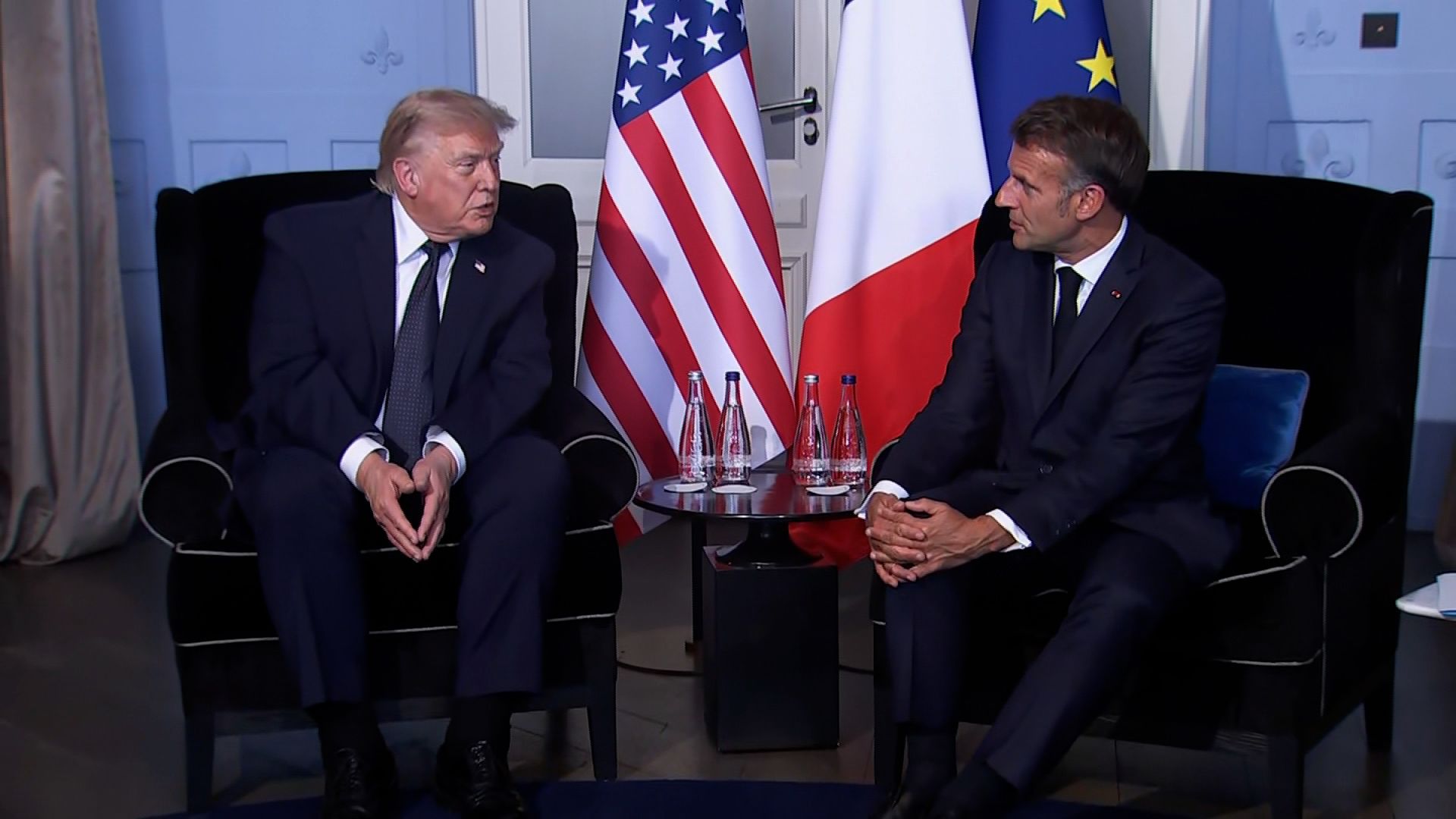
Sunday and Monday brought the news that may matter most for the second half of 2026 inflation picture. President Trump announced a US-Iran peace memorandum was "all signed," with formal signing scheduled for June 19. The deal commits Iran to halting drone and missile activity, reopens the Strait of Hormuz to commercial shipping, and unwinds the sanctions regime that has constrained Iranian oil exports for months.
The market reaction was immediate. Brent crude fell 5% on Monday to a three-month low. Gasoline futures dropped over 6%. By Thursday, oil was at multi-week lows on follow-through buying of risk assets and selling of energy positions. The 40.5% year-over-year gasoline print in May CPI looks like the peak of the energy spike.
For inflation, this is the single most important development of the month. If oil holds below $85, the energy contribution to CPI in June and July will flip from positive to negative. June CPI could print closer to 3.7% headline than the 4.2% we saw for May. That would not change Warsh's hawkish posture — he has made clear he targets core inflation — but it would change the political backdrop and could ease some pressure on long-end yields.
Watch the spread between WTI and Brent over the next two weeks. If Iranian crude actually flows, watch the implied volatility on oil ETFs collapse. The macro tail risk that has dominated 2026 for nine months may be in the process of resolving.
Markets Closed Higher Despite Wednesday's Selloff
The week ended on a constructive note. After Wednesday's FOMC-driven sell-off (S&P -1.2%, Nasdaq -1.3%), Thursday brought a sharp reversal. The S&P 500 closed at 7,500.67, up 1.1% on the day and 0.9% for the week. The Nasdaq finished at 26,517.93, up 1.9% on Thursday and 2.4% on the week. The Dow rose 0.7% to close at 51,565.26. Markets were closed Friday for Juneteenth.
This is the third consecutive winning week for all three major indices, which is a notable feat given the data backdrop (4.2% CPI, hawkish Fed, missing dot plot). The bid is coming from two places. First, the Iran peace deal removed a major tail risk. Second, the bond market actually rallied modestly after Warsh's press conference. The 10-year Treasury yield was 4.46% on Wednesday's close, essentially flat on the week despite the hawkish meeting. The bond market is signaling that the Fed has done enough.
The divergence between equity multiples and bond yields is the trade to watch into July. If the 10-year breaks below 4.30%, growth equities have room to extend. If the 10-year holds above 4.50% on hot data, the rally is likely capped near 7,600 on the S&P. The June 27 PCE print is the next major test.
Five Lessons From This Week
1. The Powell-era playbook is dead. The dot plot is no longer a reliable forward signal. The press conference no longer telegraphs. Forward guidance as a tool is being deemphasized. Investors who built their playbook around reading Fed signals need a new playbook. Watch what the FOMC does, not what it forecasts.
2. Sticky inflation needs the consumer to actually break. May retail sales said the consumer is not breaking — it is bending. As long as nominal retail sales grow 6%+ YoY, core services inflation will remain above 3%. No cuts until that breaks.
3. Energy was the swing variable — and it just swung. Iran peace plus Hormuz reopening removes 30-40% of the headline CPI pressure from May. June CPI could print 3.5-3.8%. This buys the Fed time without forcing it to cut.
4. The five task forces are the trade for 2027. Watch the August Jackson Hole speech for the first concrete recommendations. Anyone managing duration risk should be reading task force outputs as carefully as they read the FOMC statement.
5. Volatility is the new regime. Without the dot plot, every Warsh comment moves markets. Position sizing should account for higher realized volatility through year-end.
Week Ahead
Next week brings the first read on Q2 GDP, the May PCE print on June 27 (the Fed's preferred inflation gauge), Fed bank stress test results on June 24, and earnings from Micron, Paychex, and Jefferies. Watch the PCE print most closely — if it confirms a deceleration from the 4.2% CPI, the rally that started Thursday has room to extend. If PCE accelerates, expect the 10-year to break back toward 4.60% and the equity bid to fade.
The setup heading into the back half of 2026 is more constructive than it was a week ago. Energy is rolling over. The consumer is still spending. The Fed is hawkish but constrained from cutting. And the major geopolitical tail risk of the year has just been removed.
What this is not is a clear all-clear signal. Warsh is rebuilding the Fed in real time. The five task forces are not announcements you make if you expect a normal year. Position sizes should be smaller than they were six months ago. Stop-losses should be tighter. And the next major catalysts — June 27 PCE, July CPI, August Jackson Hole — should be on every investor's calendar.
The markets that reward discipline are the ones that move on data. The data this week supported a measured rally. The data next week will tell us whether it has legs.
If you want our live commentary on the June 27 PCE print, July FOMC, and weekly market briefings as they happen, join our Telegram community: https://t.me/+6VRTM83FVqEwZDll
Together, Next Level.