Investing
Cracks in the Jobs Wall: 57K Payrolls, Dow at a Record, and Tesla's 480K Surprise
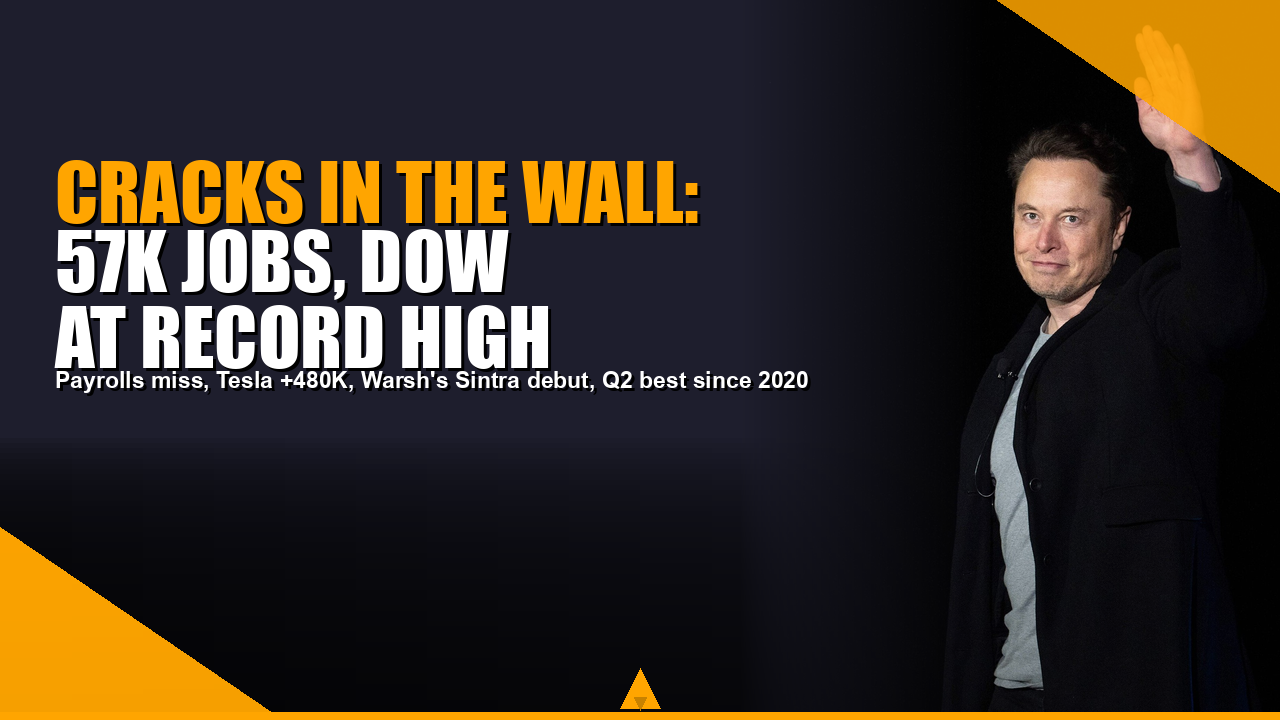
The narrative shifted on Thursday morning. For six weeks, the story had been simple: growth is strong, jobs are hot, inflation is sticky, and Kevin Warsh's Fed has closed the door on 2026 cuts. Then the June payrolls print landed at 57,000 — barely half the 115,000 consensus — with April and May revised down a combined 74,000. Leisure and hospitality shed 61,000 jobs. Private payrolls added just 49,000. And yet the Dow Jones closed at a fresh record high the same day.
That contradiction is the story of the week, and it is the setup for the second half of 2026. The S&P 500 just posted its best quarter since 2020 — up more than 15% in Q2 — while the labor market is now generating its slowest three-month average of hiring since the pandemic recovery cooled. Tesla crushed Q2 deliveries. Warsh made his global debut in Sintra. And the "no cuts, maybe hikes" narrative just took its first real bruise. Here is what happened, and how to read it.
The Jobs Wall Just Cracked
Thursday's June nonfarm payrolls report came in at 57,000 versus 115,000 consensus — a miss of nearly 60,000. The unemployment rate ticked down to 4.2% from 4.3%, but that came almost entirely from a 0.3-point drop in the labor force participation rate to 61.5%, not from actual job creation. The employment-population ratio also fell.
The revisions were worse than the headline. April payrolls were cut from 179,000 to 148,000. May was cut from 172,000 to 129,000. Combined, that is 74,000 fewer jobs than previously reported over the prior two months. The three-month average of hiring is now roughly 111,000 — well below the 188,000 pace the Fed was watching just two months ago.
Sector detail sharpened the picture. Leisure and hospitality lost 61,000 jobs in June — a stunning reversal from May's strength and a print that Goldman had expected to be boosted by 40,000 from World Cup hosting activity. Private education and health services added 69,000 jobs. Professional and business services added 36,000. Nearly every other sector — manufacturing, retail, transportation, financial activities, government — showed little or no change. The private-sector job engine is now running on two cylinders instead of six.
Dow Records Meet A Cracking Labor Market
The paradox of the week is that the Dow Jones Industrial Average closed at a fresh all-time high on Thursday — the same day the jobs report missed by nearly half. Wall Street's initial reaction was to buy: the Dow jumped roughly 600 points on the print, the S&P 500 finished flat, and the Nasdaq fell 0.6% as chip stocks rolled over hard for a second straight day. Micron and Intel both fell more than 9% during the week's tech unwind.

Zoom out and the second-quarter picture is remarkable. The S&P 500 posted its biggest quarterly gain since the second quarter of 2020, recovering roughly four times over from Q1's 4.4% loss. The Russell 2000 posted its biggest first-half gain since 1991 — that is not a typo. The Nasdaq had its best quarter since 2020. Small caps, emerging markets, and international developed equities all outperformed US large caps over the quarter.
The read-through is that the market has priced a very specific outcome for the second half: growth stays positive, inflation slowly rolls over as the labor market weakens, and the Fed eventually cuts — even if it takes until Q1 2027. The rotation out of AI concentration and into cyclicals and small caps has been the cleanest expression of that trade. The risk, of course, is that the market has priced the soft landing before the data confirms it. Thursday's payrolls print was the first crack in the wall.
Warsh's Sintra Debut
Fed Chair Kevin Warsh made his first international appearance as Chair on Tuesday, July 1, at the ECB Forum on Central Banking in Sintra, Portugal. It was a carefully scripted debut. He declined to hint at what the Fed will do at the July 30 meeting. He repeated that the FOMC's June statement was intentionally shorter than under Powell — no forward guidance, no dot-plot participation from the Chair, no promises. And he made one line the headline of the week: inflation is "too high," and he would "disappoint" anyone who thinks he will tolerate readings above 2% for long.

The subtler signal was Warsh's language on artificial intelligence and productivity. He called AI a "revolution" with "huge implications" for Fed policy, and floated the idea that the US is likely to be a "big winner" in the AI race. That framing matters: if Warsh believes AI-driven productivity gains are structurally raising the economy's speed limit, he can justify higher-for-longer policy without triggering a recession — because the higher neutral rate absorbs the pressure that would normally hit growth.
By the end of the week, the combination of Warsh's hawkish inflation posture and the soft jobs report had markets pricing modestly higher odds of a cut before year-end — but still lower than they were at the start of June. Fed funds futures now imply roughly one 25-basis-point cut by December, with the July 30 meeting still expected to be a hold. Bank of America's three-hike call from a week ago is off the table.
Tesla Reasserts Itself
The other headline event of the week was Tesla's Q2 delivery print on Wednesday. Tesla delivered 480,126 vehicles in Q2 versus a company-compiled consensus of 406,024 — a beat of nearly 74,000 vehicles, or 18% above expectations. Year-over-year growth of roughly 25% is the fastest in over two years. European deliveries, which had been the biggest weak spot in Q1, improved meaningfully. Energy storage deployments also came in strong at 13.8 GWh.
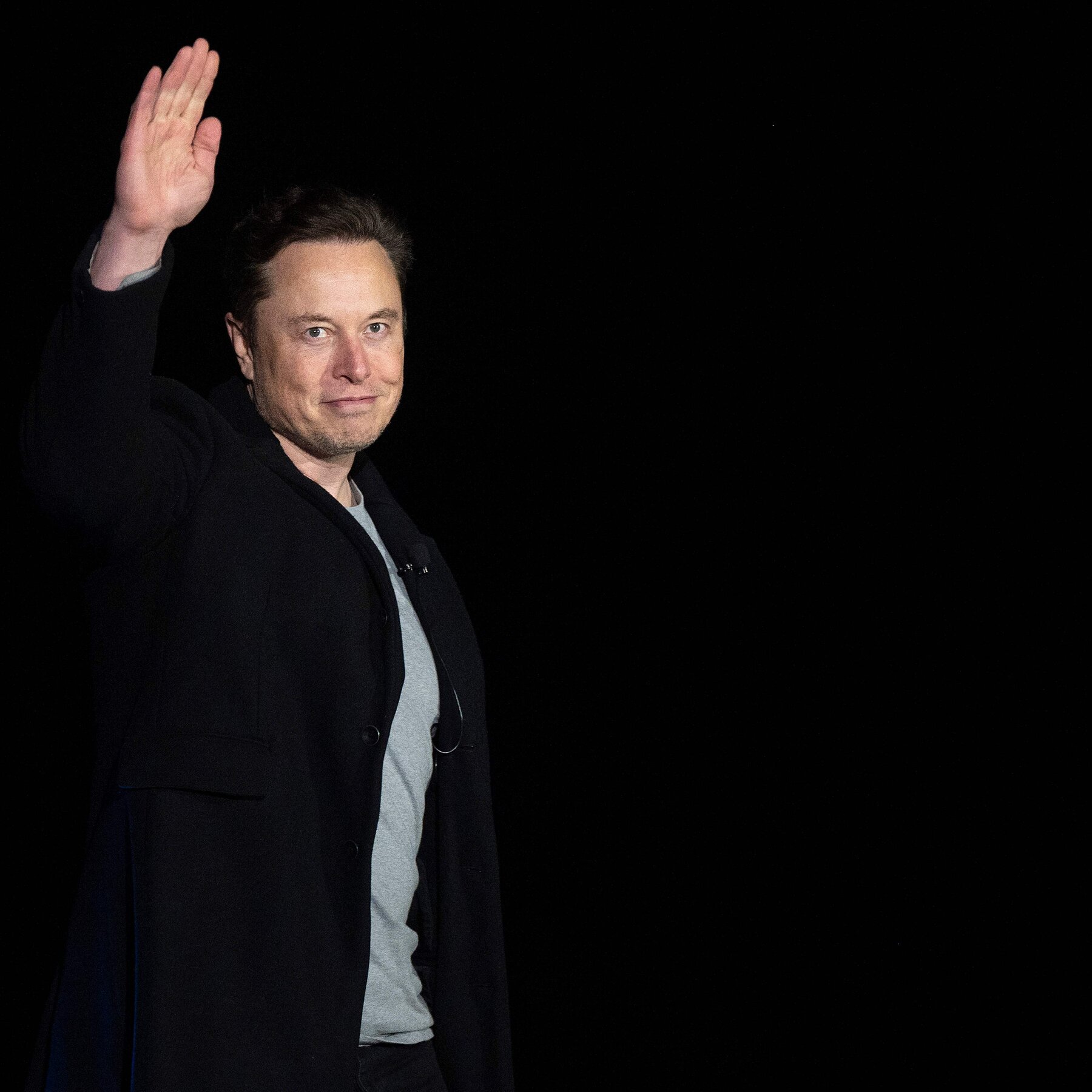
Two things drove the print. First, the Model Y refresh (Juniper) has now been in full production for two quarters, and demand has clearly caught up with supply. Second, Musk's public reconciliation with the White House in June — after the very public spat earlier this spring — coincided with the European delivery rebound and a broader easing of political headwinds against the brand in Europe. Tesla stock had been down about 5% year-to-date heading into the print. Delivery numbers this strong will force analysts to raise Q2 revenue and margin estimates ahead of the July 22 earnings report.
The read-through for retail investors is that Tesla's fundamentals-driven trade is finally decoupling from the daily political news cycle. If Q2 earnings show operating margin expansion — even modest, even alongside price stability rather than cuts — the setup for the second half becomes materially more constructive.
ISM Confirms The Rotation Story
Wednesday's ISM Manufacturing PMI came in at 53.3 for June, down from May's 54.0 (a three-year high) but still comfortably in expansion territory for the sixth straight month. The manufacturing employment sub-index moved up to 49.7 from 48.6 — still contractionary, but the smallest contraction in months, and 64% of survey respondents said they were actively hiring. The prices-paid index remained elevated.
What matters is that manufacturing — the sector everyone was watching for cracks — is holding up. The S&P Global flash manufacturing PMI for June hit 55.7, a 49-month high, and the manufacturing output index hit a 59-month high at 57.7. If you overlay this with Thursday's payrolls data, the picture becomes clearer: the weakness in June was concentrated in services, particularly leisure and hospitality. The goods economy — the part most sensitive to interest rates and tariffs — is actually accelerating.
For portfolios, this validates the Q2 rotation trade: cyclicals, small caps, industrials, and international developed markets have outperformed for a reason. The bet is that the productive, capital-heavy side of the economy is still expanding, even as the consumer-services side softens. That is the shape of a soft landing, and it is what the market has been buying.
Five Lessons From This Week
1. The labor market has finally begun to slow. The three-month average of 111,000 is the slowest sustained pace since the pandemic recovery. Watch the July print (August 1) — a second sub-100K month would force the Fed's hand.
2. Records can coexist with recession signals. The Dow at a record and payrolls at 57,000 is not a market bubble — it is a rotation. Cyclicals and small caps are pricing in cuts; the market breadth story is real.
3. Warsh is playing the AI card. By framing AI as a productivity revolution that raises the neutral rate, he gives himself cover to stay tight even as growth data softens.
4. Tesla is back in the fundamentals conversation. A 480K delivery quarter and a repaired White House relationship shift the setup for July 22 earnings materially higher.
5. Rotation over concentration. The Russell 2000's best first half since 1991 says the trade is broader than the Magnificent Seven for the first time in three years. Position accordingly.
Week Ahead
Markets are closed Friday for Independence Day, so this coming week begins with a natural digestion of the Thursday data. Tuesday brings the June ISM Services PMI, which will be the counterpart to Wednesday's manufacturing print and the cleanest read on how badly the leisure and hospitality weakness reflects in the broader services economy. Wednesday brings the June FOMC minutes — Warsh's first as Chair — which will be scrutinized for any hint of an internal debate around the dot plot's hawkish shift.
Q2 earnings season formally begins the following week with the major banks reporting July 15. Expect strong buyback and dividend announcements following last week's stress test results. The two names to watch most closely between now and then are Delta Air Lines and PepsiCo — both report July 10 and both give clean read-throughs on consumer discretionary and staples demand in the softer labor environment.
The setup for the second half of 2026 is now the cleanest it has been in a year. Growth is positive but slowing. Inflation is sticky but not spiraling. The Fed is on hold but with a modest cutting bias returning. Corporate earnings and buybacks are strong. And the rotation trade — small caps, cyclicals, international — is showing real leadership. The risk case is that the labor market slows faster than the Fed can respond. The base case is that the soft landing narrative gets a second wind.
The discipline for retail investors right now is to lean into the rotation, not fight it. Concentrated positions in a handful of AI names carried 2024 and 2025. The second half of 2026 looks different — broader, slower, and rewarded by patience rather than by chasing the leader board.
If you want our live commentary on the July 30 FOMC decision, the Q2 earnings prints, and weekly market briefings as they happen, join our Telegram community: https://t.me/+6VRTM83FVqEwZDll
Together, Next Level.